I continue to take forward my study of spatial representation through photography, in particular the study of digital space. I’m planning to pick up more of the cinematographic, gaming and manga influences I’ve come across through my previous projects, such as ‘The Space Between’. I’m once again thinking of looking into ‘in-game’ photography as a depiction of space in the datasphere.
I plan to revise the proposal for my Final Research Project, and consider expanding my work from its current exploration of data flows in connected urban environments to an exploration, through non-anthropocentric photography, of how systems with intelligent algorithms ‘view’ the real world.
For these two avenues of exploration I’m thinking – at this stage of my research – of connecting with communities in the gaming world on the one hand, and to deepen my research into practical operations of smart city systems on the other.
Currently my final research project – The Digital Divide (Working Title) – is conceived as an exploration of human life in a digitally controlled environment, in a ‘Smart City’, for want of a better terminology, through the use of spatial representation:
The Digital Divide (Working Title) is a visual investigation of ideas, concepts, and critical theory surrounding the nature of digital space and human interaction with it. The project starts by exploring the portals in society through which we enter the datasphere and leads to documentation, representation, and probing of life in a smart city (Sutherland 2018).
In looking for new ‘dimensions’, I’m exploring research-based photography to identify methods that could inform my own approach.
Below two examples of photographers whose research approach can relate to my own project.
Artist and photographer Meret Wandeler focuses her photographic research on the transformations of urban fabric in suburban areas. Long-term photographic observation is a key approach in her practice, as is the collaborative nature of projects (Wandeler 2019a). Her serial projects are characterized by the fact that the research constitutes the final body of work.
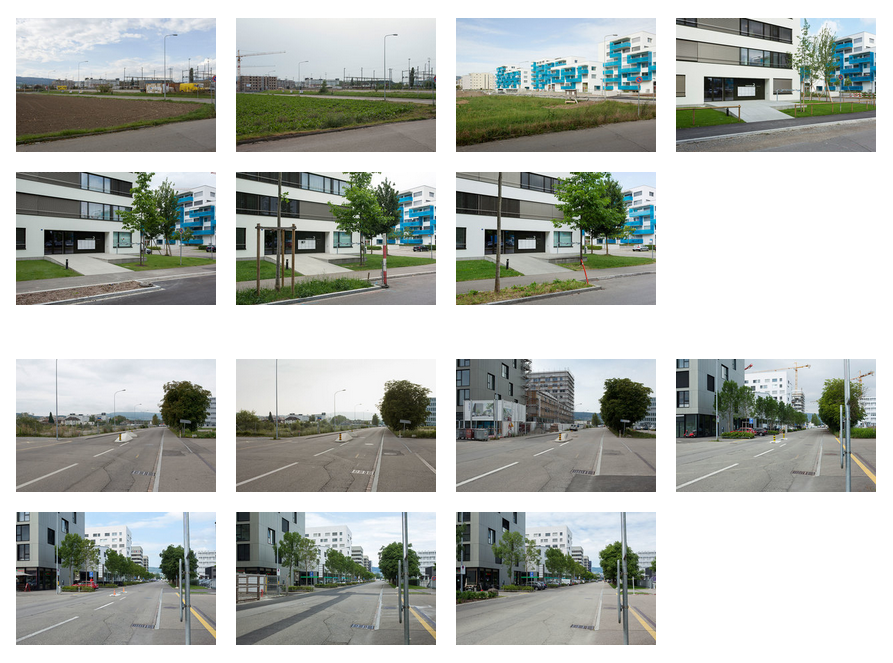
Fig. 1. Meret Wandeler/Ulrich Görlich, 2005, Elmar Mauch (Rephotography) 2007, Christian Schwager (Rephotography) 2009–2017, Example of overviews from ‘Long-Term Photographic Observation of Schlieren 2005-2020’ (Wandeler 2019b)
The ‘Long-Term Photographic Observation of Schlieren 2005-2020’ is an example of visual research into the ongoing processes of transformation in one specific community, located in this case in the Zurich Metropolitan Area.
Through urban transformation, initially evolving from a farming village to an industrial zone in the post-war period, Schlieren ended the 20th Century as a ‘non-place’, as globalization led to the abandonment of its industrial sites (Wandeler 2019b: 366).
Wandeler, in collaboration with Ulrich Görlich, sought to document the impact of a holistic urban redevelopment in the early 21st Century, with the pressure on land use and environmental degradation in Switzerland being high on the political agenda (idem: 368).
The project, centred around the method of rephotography (with the rephotography by Elmar Mauch and Christian Schwager), was the first photographic research project at a Swiss Art Academy in the emerging field of artistic research which became established in Europe at the turn of the millennium, mainly in Scandinavia, the United Kingdom and Switzerland (idem: 370).
Considering work of another artist, Melanie Manchot’s research-driven, lens-based artwork employs photography, video, film and sound. Manchot has stated that “Cameras, whether still or moving, are crucial devices shaping the construction of the work” and more importantly “are an organizing principle, an apparatus that becomes part of a set of relations I wish to create” (Parafin 2016).
Manchot’s methodology is built on the processes of exchange, contribution and collaboration. She often involves social groups, or communities, to create serial portraits at the boundaries of documentary and fine-art. The works constitute a discourse on the individual and social self (idem).
In ‘Tracer’ – a single channel projection and 3 channel installation, 19’45” in stereo sound – Manchot depicted the movements of parkourists as they sought out the opportunities and limits offered by constructed space to produce specific forms of physical interaction. As Manchot explains on her website
“The film draws attention to how human agency may act upon built environments and questions the authority inherent to architectural form” (Manchot 2019).
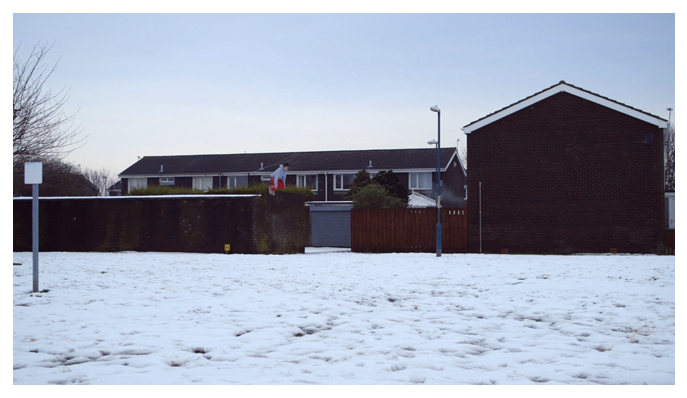
Fig. 2. Melanie Manchot, 2013, Still from Tracer (Manchot n.d.)
Tracer was funded by the Great North Run Moving Image Commission as part of the event’s culture programme and saw Manchot working “with a group of local parkour runners to re-imagine the architecture and spaces along the route” (Great North Run Culture 2013).
Long, slow sequences and overseeing viewpoints in the video serve as a reminder to the viewer of surveillance in public space, as well as our individual and collective role as voyeur on society. Stereo soundscapes offer alternative views into the physicality of parkouring as the impacts of human bodies on constructed space are revealed (Manchot 2013).
Sources
Great North Run Culture (2013) Melanie Manchot: Tracer. Available at http://greatnorthrunculture.org/aboutcommission198a.html?commid=63 [Accessed 29 September 2019]
Manchot, M. (2013) Tracer, 2013 – Trailer. [Video] Available at https://vimeo.com/220456235 [Accessed 29 September 2019]
Manchot, M. (n.d.) Tracer, Video Installation, HD, 19’43”. Available at http://www.melaniemanchot.net/category/tracer/ [Accessed 29 September 2019]
Parafin (2016) Artists – Melanie Manchot. Available at http://www.parafin.co.uk/artists–melanie-manchot.html [Accessed 29 September 2019]
Sutherland, G. (2018) PHO701 Research Project Proposal. Submitted for the MA Photography Module Positions and Practice, Falmouth University, December 2018
Wandeler, M. (2019a) Meret Wandeler. Available at https://www.meretwandeler.net/ [Accessed 29 September 2019]
Wandeler, M. (2019b) Schlieren: Spatial Transformation in a Suburban Municipality in Switzerland. In Framed Landscapes: European Photography Commissions 1984-2019. Exhibition Catalogue, Museo ICO, 6 June to 8 September 2019). Madrid: Fundación ICO.

 Gordon Sutherland - Photography Research Journal