Tag Archives: Critical Theory

08.03.20 > The heart of the matter (on spatial and temporal representation in sculpture)

Foreword

In 2019 during my visit to the exhibition ‘Framed Landscapes: European Photography Commissions 1984-2019’ at the Fundación ICO in Madrid, I picked up a copy of the essay ‘Not to occupy a place, but to create space’, by museum director and curator Kasper König (König 2005).

Although this is an essay on sculpture, I could feel it resonating with my thoughts on how to visualize non-physical space – the subject matter I’ve been contemplating throughout my Master’s degree – as well as how I might approach my elusive and constantly evolving Final Major Project.

The Framed Landscapes exhibition was pivotal in revealing that my project could be something more than its photographic representation, its photographic existence. While writing this entry in my Critical Research Journal I’m still not sure what that ‘something more’ is.

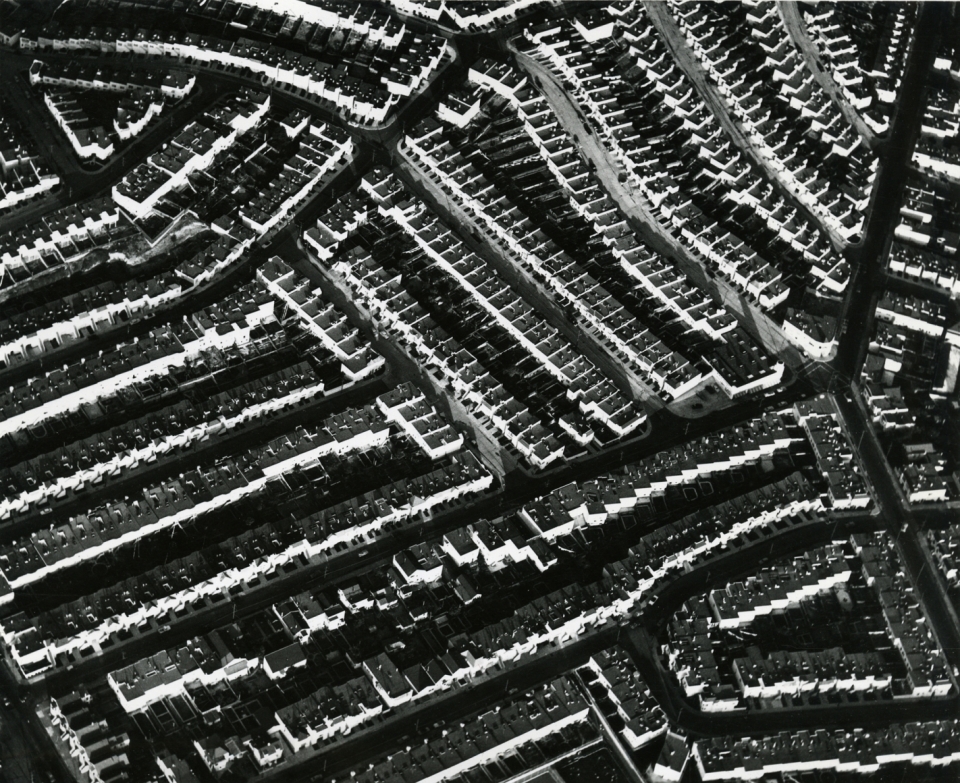
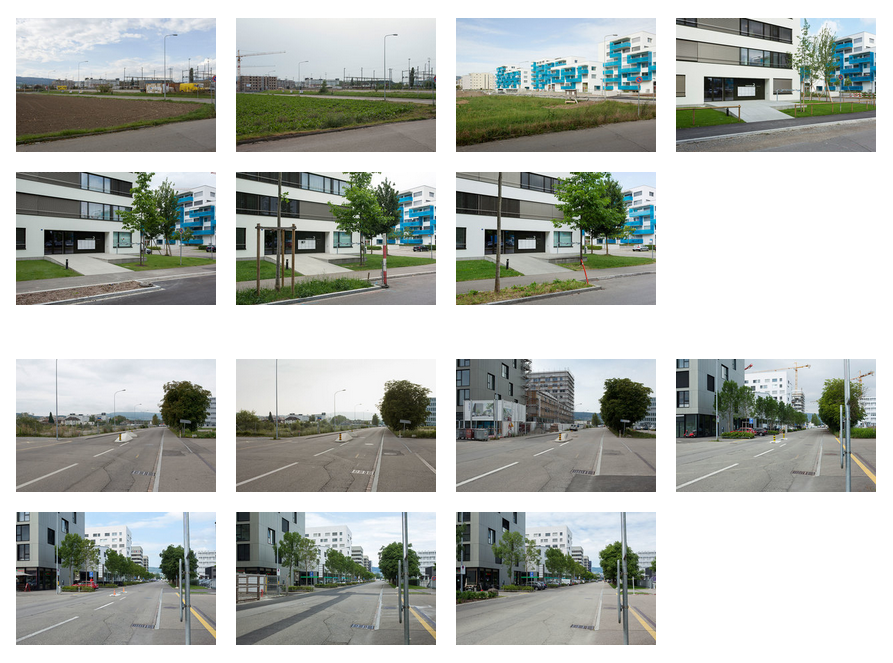
One of the projects on display in the exhibition, the photographic commission Schlieren: Spatial Transformation in a Suburban Municipality in Switzerland (Fig.1) by Meret Wandeler and Ulrich Görlich, is a collaborative study of transformation in one specific community over nine years (Wandeler 2019). Indeed, Wandeler’s serial projects are characterized by the fact that the research constitutes the project, and not the photographs per se (Sutherland 2019).
Wendeler 2019

Fig. 1. Meret Wandeler/Ulrich Görlich, 2005, Elmar Mauch (Rephotography) 2007, Christian Schwager (Rephotography) 2009–2017, Example of overviews from ‘Long-Term Photographic Observation of Schlieren 2005-2020’ (Wandeler 2019)

This month, in search of the heart of my project and answers to my questions about space, I took König’s essay from my bookshelf.


Not to occupy a place, but to create space

Whilst reading König’s essay ‘Not to occupy a place, but to create space’ – which reflects on the 1977, 1987, 1997 and 2007 (at that time still to be realised) editions of the Münster Sculpture Project –  I found myself wondering about the concept of space as a three-dimensional volume.

Or rather, I started wondering about our apparent preoccupation with space as something which exists in three dimensions.

Indeed, Tate defines sculpture as an art term for “three-dimensional art made by one of four basic processes: carving, modelling, casting, constructing” (Tate n.d.).

Yet ‘space’ doesn’t necessarily have a physical dimension, such as in ‘head-space’ or ‘cyberpsace’, whilst in photography it is represented on a two-dimensional surface.

The question arises, if space doesn’t necessarily have a dimension, what is actually being represented in a photograph?

The Münster Sculpture Project is a city art project including outdoor installations, – mainly, but not exclusively – temporary, spread across the city’s public spaces.

In exploring the art works, König indirectly reveals that each of the artists identifies an elementary, or fundamental, characteristic of the place and then creates a space which represents that.

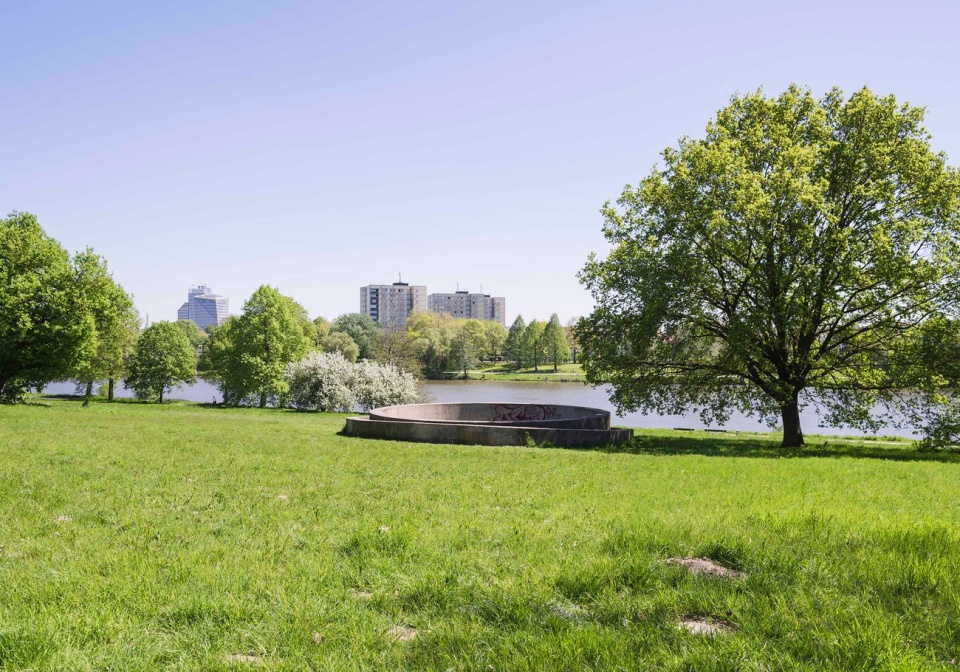
On Untitled  (Fig.2), Donald Judd’s work for Münster, König reveals that the place offered Judd the opportunity to realise an idea that he’d been considering for a while.
Donald Judd untiltled

Fig. 2 Donald Judd, 1976/77, Untitled, Lake Aa meadows below Mühlenhof open-air museum, Münster, 51°56’59.3″N 7°36’04.8″E. [Outer ring: height 0.9 m, width 0.6 m, diameter 15 m, Inner ring: height rising from 0.9 m to 2.1 m, width 0.6 m, diameter 13.5 m, Concrete sculpture] (Public collection of Stadt Münster) Photo: LWL-Museum für Kunst und Kultur / Hubertus Huvermann

“It’s quite simple. You have the water level, and you have the lie of the land, and you have two rings, an inner and an outer ring. The inner ring is in line with the water level and the outer ring is in line with the sloping ground.” Kasper König (König 2005: 10)

In her text on Untitled, Sophia Trollmann notes that in 1964, when commenting on approaches to volume, Judd stated “Three dimensions are real space. […] Actual space is intrinsically more powerful and specific than paint on a flat surface” (Kerber 1977, in Trollmann n.d.).

Judd in general sought an unmediated experience of his works, supporting a new American art which rejected the significance of representational space over real space, and – his works being intended as a physical experience on a human scale – “their potential interpretation does not extend beyond the object itself; they are not symbols for something else.”. The viewer creates the relationship with the artwork, and in this case, with the topography itself (Trollmann n.d.).

In Untitled, we see the fundamental element represented by the sculpture is the topography. Through the sculpture the place becomes a space, and with viewer interaction it again becomes a place.

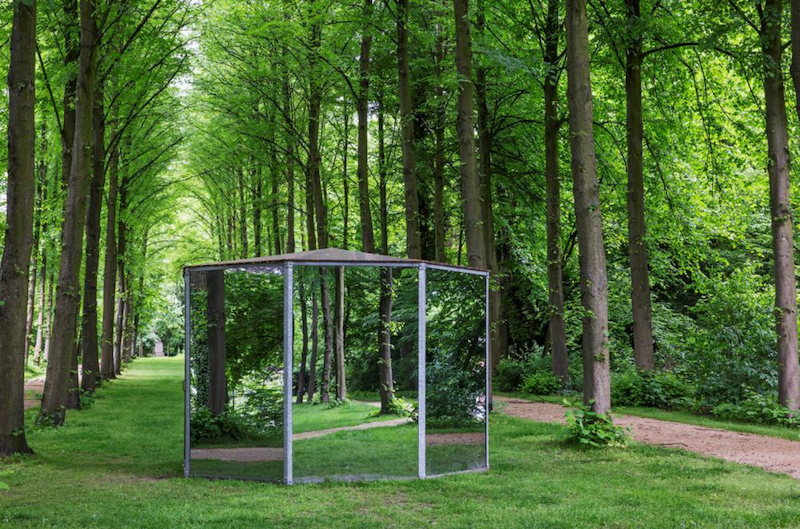
Considering Dan Graham’s Octagon for Munster (Fig. 3),  Ronja Primke calls it “an allusion to the tradition of the so-called pleasure pavilion that since the baroque had become a standard feature of any laid-out park or palace grounds as a venue for social gatherings and festivities” (Primke n.d.). König also reflects on the theoretical implications of the pavilion as a place of public art, extending his considerations to “the park as the oldest democratic form which we have of public architecture” (König 2005: 10).
Dan Graham Octagon for crj

Fig. 3 Dan Graham, 1987, Oktogon für Münster [Octagon for Münster], Temporary installation in the avenue of the southern part of Schlossgarten, Münster, and various locations thereafter during 1988, 1997/98, 2007 and 2017. [Height 240 cm, diameter 365 cm, Octagonal pavilion with two-way mirrored glass, metal and wood] (Collection of LWL-Museum für Kunst und Kultur, Münster) Photo from 2017 installation: LWL-Museum für Kunst und Kultur / Hanna Neandar

Viewed through the lens of Foucault’s theory of control, the park -as a gift of freedom from the authorities – appears to becomes a mask. I wonder if the reflective octagon is not intended, through its reflections, to deconstruct the artificial nature of the park and reveals the park’s true nature? A demasking of place by revealing its fundamental essence of being an artificial construct.

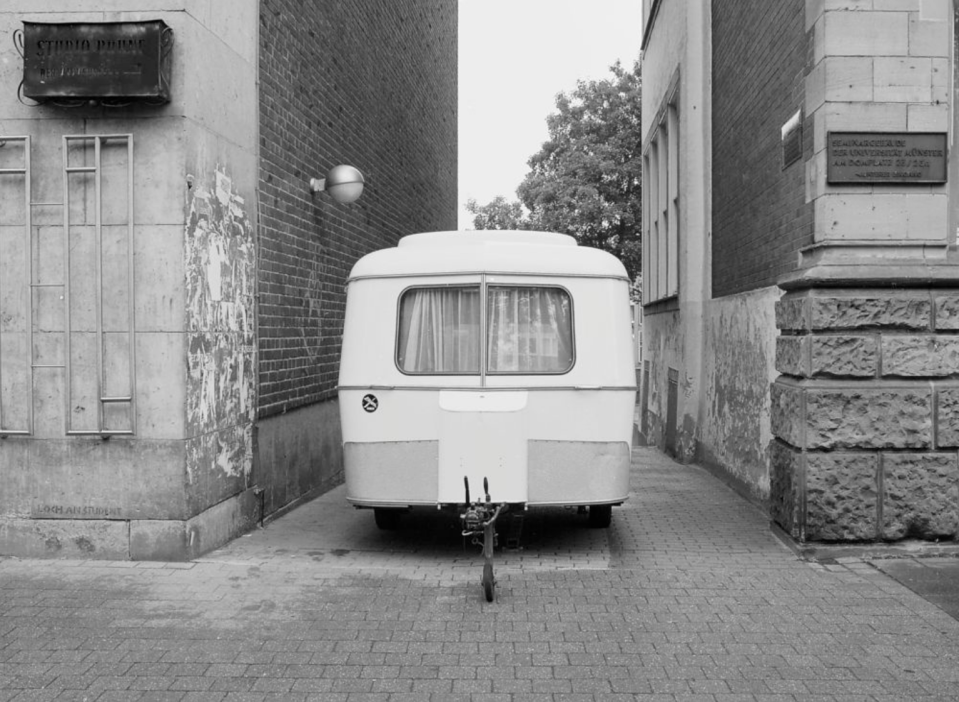
On Michael Asher’s Trailer in Various Locations (Fig. 4), König considers it “a metaphor for mobility, and for understanding the relationships, social relationships, within a city.” (König 2005: 10).
Michael Asher Caravan large res

Fig. 4 Michael Asher, 1977, Trailer in Changing Locations, Temporary installation in various locations over 19 weeks, Münster, and on three occasions thereafter during 1987, 1997 and 2007. [rented white caravan; weekly printed handout with descriptive text, maps, nineteen locations; documentary photographs of the caravan’s placement; and viewer search or happenstance] ((Collection of LWL-Museum für Kunst und Kultur, Münster) Photo from 2007 installation: LWL-Museum für Kunst und Kultur / Roman Mensing

But it is more than a sculpture, it is an experience, and a dialogue on art, ownership, re-conceptualisation, and responsibility. Asher placed the caravan in various sites around the city. The location was changed weekly, starting from the city centre, radiating out to the suburbs and rural places, before returning to the city centre at the end of the exhibition. The installation, maintenance, and photographic documentation of the work was placed on the city’s Skulptur Projekte. The work “consists of a number of essential components. It was made up of the white caravan; the printed handout produced each week with the descriptive text, maps, nineteen locations; the documentary photographs that show the caravan’s placement within the surrounding cityscape and, of course, the viewer’s search for or happenstance stumbling upon it” (Skulptur Projekte Archive n.d.).

The sculpture was not the caravan itself, but the multi-dimensional and multi-faceted dynamic experience of the participants. A dynamic, temporary sculpture spread over a city.

Over a period of four decades the work evolved – much as the long term spatial transformation project of Schlieren (Wandeler 2019; Fig. 1) –  always with the same model of rented caravan and the same locations, although the city backdrop was changing and during some weeks of the later installations the caravan had to be stored temporarily as the sites were no longer accessible.

Asher’s work was progressive in many ways, including the concept of displacing the labour for installation and photographic documentation of the project and its successive editions onto the institution that owned the work.


Expanded Ecologies: Perspectives in a Time of Emergency

My thoughts on spatial representation have evolved after reading König’s essay, and after following other avenues of research on the Münster Skulptur Projekte. I wondered how I could explore the concepts of place and space within a recurring theme of my work which is ecocritical analysis.

I revisited the essays, in-situ works, and ephemeral actions of the exhibition ‘Expanded Ecologies: Perspectives in a Time of Emergency’ (Vitali 2009). The exhibition hadn’t been on my radar at that time, but being underpinned by ecocritical considerations I’d acquired the catalogue in 2017 for future reference.

As Anna Kafetsi, Director of the Greek National Museum of Contemporary Art points out in her foreword, it is in new inter-human and subjective relationships of the individual with private and public space, groups and communities, the body and time, that philosopher-psychoanalyst Félix Guattari sought the content of his three ecologies: the environmental, the social, and the mental. Kafetsi reflects that “public space and the environment, in broad terms – in which diverse potential definitions and realities meet and intersect, such as the local, natural, urban and social environment, the global community and cyberspace, nature and culture  – inspire, mobilise, provide creative opportunities …” (Kafetsi 2009).

Daphne Vitali, curator of the exhibition, notes that what is needed is a “new approach, one that considers man as part of the ecosystem, rather than treating man and nature as two concepts (Vitali 2009: 25).

For simplicity, I term this eco-egalitarianism, alternatively in the context of Guattari’s philosophy it can be considered as a perspective which embodies the concept of otherness.

“Ecological Thinking is not simply thinking about ‘the environment’ […]. It is a revised mode of engagement with knowledge, subjectivity, politics, ethics, science, citizenship, and agency that pervades and reconfigures theory and practice”

(Code 2006, in Vitali 2009:25)

Guattari’s ecosophy moves beyond the binary consideration of nature and humankind into a multifoiled consideration of physical and mental interconnectedness, where one embodies the other. To exploit nature or others, becomes self-exploitation.

It’s in this context that I identify with the artists in this exhibition who “have not created works ‘for’ the environment but, rather, works which encourage us to think over the social, political and cultural condition”. The installations do not preach, nor berate the destruction of the environment, rather they ask us “to think about the relationship of the urban and natural environment; the individual, nature and society; nature and technology; architecture and ecology” (Vitali 2009: 28).

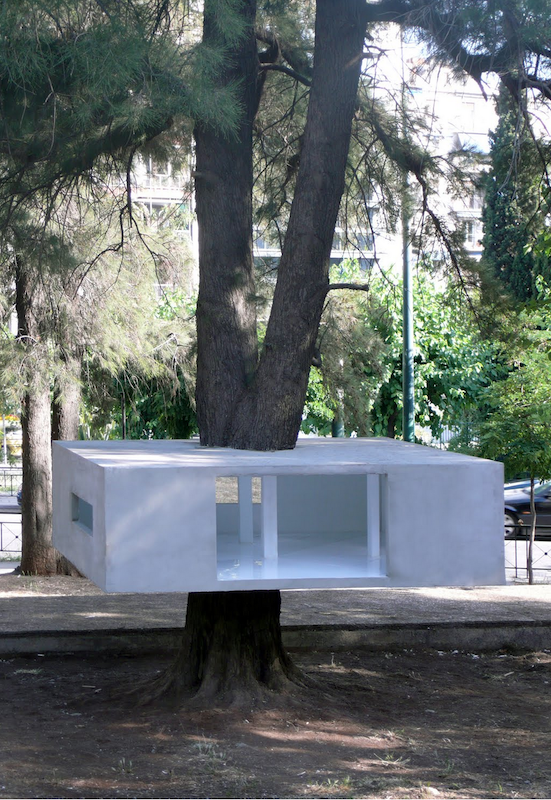
Modern Illusion (Fig. 5), a sculptural installation by Giorgos Gyparakis, comments on the illusionistic experience of nature in cities. Nature is introduced in the urban landscape in an attempt to heal the city, but this is treating the ailment, not dealing with its underlying cause.
Gyparakis Large for crj

Fig. 5 Giorgos Gyparakis, 2009, Modern Illusion, Temporary installation in the grounds of the Athens Conservatory from June 12th until October 4th, 2009. [Sculptural installation] Photo from installation / EMST (2009)

I found it interesting that the catalogue contains digital representations of the artworks, which provided a non-dimensional spatial representation (as code) and two-dimensional digital representation on the printed page. The question arises as to which is the original artwork and which is the copy? And whether, or not, one is more ‘valid’ than the other?

I first came across Gyparakis’ work (Fig. 5) in 2017 as a digital representation accompanied by text. I was unaware if there was actually ever an installation, or only the digital concept for one. Now experiencing the installation through photographic representation in 2020, for me the original artwork remains the digital one. I find this an interesting thought within the context of expanded ecologies, which also include the reality of cyberspace and digital representation.

Modern Illusion was first and foremost an idea, a concept, then a code, then a digital spatial representation on screen and print, then an installation, then a photograph. A sculpture in multiple dimensions.

On the fundamental, or elementary characteristic of the place where it is installed, in Modern Illusion we see cohabitation of buildings and nature in the dense urban environment of Athens, but it is an uncomfortable symbiosis. Not an egalitarian one.


A Submissive Acknowledgement of Powerlessness

Revisting Expanded Ecologies: Perspectives in a Time of Emergency led me to explore recent work of Andreas Angelidakis, who works at the intersection of art and architecture.

In his exhibition ‘A Submissive Acknowledgement of Powerlessness’ which took place in Athens in the summer of 2019, Angelidakis continued to explore architecture as surfaces and volumes which emerge from the external forces that shape our built environment. Reflecting on the graffiti splattered buildings of downtown Athens, Angelidakis appears to be asking if nowadays the only way for a building to have something meaningful to say is to have a layer of text on it (The Breeder 2019).

“As graffiti covers weak modernist buildings shaped by petty profit margins and corrupt governance, they become reactionary, political, buildings with a voice”

(The Breeder 2019)

In the seating piece from the series ‘Domestic Ruins’, the forms are recognizable as deconstructed elements of modernist and post-modernist buildings (Fig. 6). Clear vinyl reveals the sofa padding and the surface is given a voice with the repeated statement “Ignoring Conceptual Contradictions”.
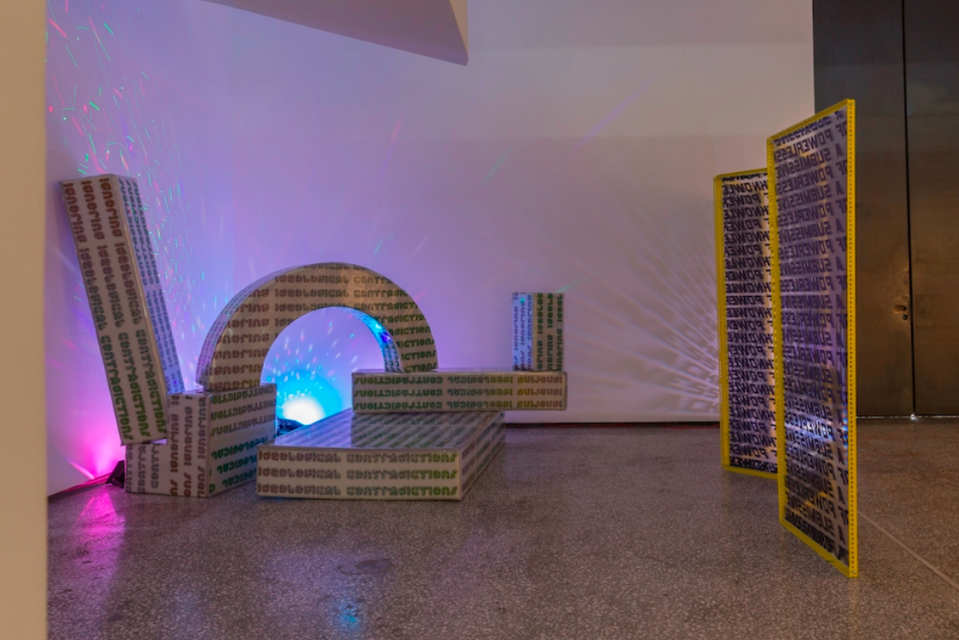
Andreas Angelidakis Ignoring for CRJ

Fig. 6 Andreas Angelidakis, 2019, Seating piece from the series of ‘Domestic Ruins’, Gallery installation at The Breeder, Athens, from 30 May until August 31, 2019 [Installation, Clear vinyl and foam padding]

Angelidakis explores fundamentals of the generic place that inspired him, the environmental impact of a construction sector based purely on short term profit, and the anti-establishment voices that rise to the surface to remind us of “the futility of our financial, environmental and social practices” (idem).

Ultimately, the question also arises, if by sitting on them in a gallery we also declare our complicity?


The heart of the matter

In responding to my question “if space doesn’t necessarily have a dimension, what is actually being represented in a photograph?” I’ve been guided by my consideration of three-dimensional space through the recognizable and tangible volumes of sculpture.

To the three-dimensions of sculpture, I would immediately add a fourth dimension, which is that of time. In particular temporary or moving installations allow the viewer to experience the concept of time. Each viewer also adds another dimension to the works, so they become multi-dimensional.

In each of the sculptures that I explored, the artists have identified a fundamental, or fundamentals, of the place and created a sculptural space in which the viewer can experience those fundamentals.

As such it seems that the artwork is a conceptual space which, with the viewer’s sentient interaction, becomes a new place.

In my use of photography and the recurrent motifs of cityscapes, buildings and infrastructure, it appears that I use spatial representation to create spaces within which the viewer creates and inhabits a new place.

Further, looking at my work through the lens of Guattari’s three ecologies, I realise that my Final Major Project is neither a series of photographs, nor a book, it is the creation of new places through viewer interaction with the images and myself, the photographer.

These new places are constructed from the fundamentals of my project’s theme, as embedded in the photographs.

Sources

EMST (2009) Installation shots from the exhibition Expanded Ecologies: Perspectives in a Time of Emergency. Available at http://fixit-emst.blogspot.com/2009/08/expanded-ecologies.html [Accessed 3 March 2020]

Kafetsi, A (2009) Foreword. In: D. Vitali (ed.) Expanded Ecologies: Perspectives in a Time of Emergency. Athens: National Museum of Contemporary Art. ISBN 978-9-60834-939-0
König, K. (2005) Not to occupy a place, but to create space. Proceedings of the synonymous Conference (22 February 2005). Fundación ICO. ISBN 978-84-934684-3-9

Primke, R. (n.d.) Oktogon für Münster [Octagon for Münster]. Available at https://www.skulptur-projekte-archiv.de/en-us/1987/projects/50/ [Accessed 3 March 2020]

Trollmann, S. (n.d.) Donald Judd, Untitled, 1976/77, 51°56’59.3″N 7°36’04.8″E. Available at https://www.kunsthallemuenster.de/en/collection/donald-judd-ohne-titel-197677-5156593n-736048e/ [Accessed 3 March 2020]

Skulptur Projekte Archive (n.d.) Michael Asher: Trailer in Various Locations. Available at https://www.skulptur-projekte-archiv.de/en-us/2007/projects/91/ [Accessed 3 March 2020]

Sutherland, G. (2019) On the search for new dimensions. Critical Research Journal blog post. Available at https://gordonsutherland.home.blog/2019/09/29/29-09-19-on-the-search-for-new-dimensions/ [Accessed 7 March 2020]

Tate (n.d.) Art Term: Sculpture. Available at https://www.tate.org.uk/art/art-terms/s/sculpture [Accessed 7 March 2020]

The Breeder (2019) Andreas Angelidakis: A Submissive Acknowledgement of Powerlessness (May 30, 2019 – August 31, 2019. Available at http://thebreedersystem.com/activity/andreas-angelidakis-a-submissive-acknowledgment-of-powerlessness-at-the-breeder/ [Accessed 3 March 2020]

Wandeler, M. (2019) Schlieren: Spatial Transformation in a Suburban Municipality in Switzerland. In: F. Giertsberg (ed.) Framed Landscapes: European Photography Commissions 1984-2019. Exhibition Catalogue, Museo ICO, 6 June to 8 September 2019. Madrid: Fundación ICO. ISBN 978-84-936568-9-8

Vitali, D. (2009) Expanded Ecologies. In: D. Vitali (ed.) Expanded Ecologies: Perspectives in a Time of Emergency. Athens: National Museum of Contemporary Art. ISBN 978-9-60834-939-0
 

02.02.20 > About Structures and Colors (Candida Höfer at Galeria Helga de Alvear, Madrid, 28.11.2019 – 08.02.2020)

On the photographic archive of Candida Höfer

In considering the physical and emotional response which Höfer’s work incites it appears that the question to be posed is not so much “What has Candida Höfer photographed in terms of interiors of famous and lesser-known archives, theatres and reading rooms?” as “Why has she photographed them?”.

In spite of, or due to, the lack of human presence in her photographs of interiors, Höfer appears to be framing a very human condition.

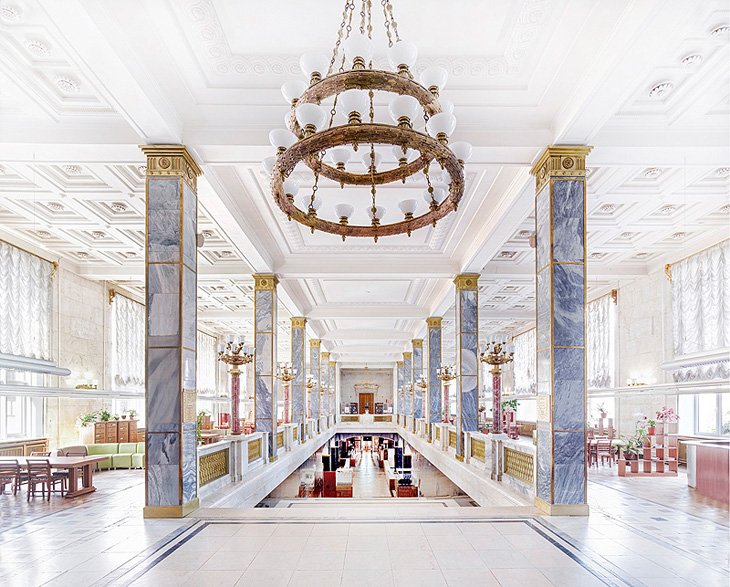
Knowledge is power. Power to control society. The collection and preservation of knowledge in the archive is the historical preservation of the ideological status-quo. Are Höfer’s images of the interiors of libraries, institutions, and civic buildings a visual archive of that power (Fig.1)?

Candida-Hofer-7 Moscow State Library

Fig. 1 Candida Höfer, 2017. Rossiskaya Gosudarstvennaya Biblioteka Moskwa II. [180 x 212,5cm, Chromogenic print, Edition of 6]

In his critical analysis classifying Walker Evans photographs of Victorian architecture, lecturer on American visual culture Barnaby Haran suggests that Evans’ images are a masked social commentary hidden behind a standardized approach based on archival photography. He places Evans’ work within Foucault’s theories on knowledge and power. Therein the archive is an inherent part of social regulation and Haran posits that Evans used standardization of a way of looking to engage with the concept of social regulation (Haran 2010: 198).

Applying this lens to Candida Höfer’s oeuvre of images of the bastions of culture could reveal insights into her visual texts.

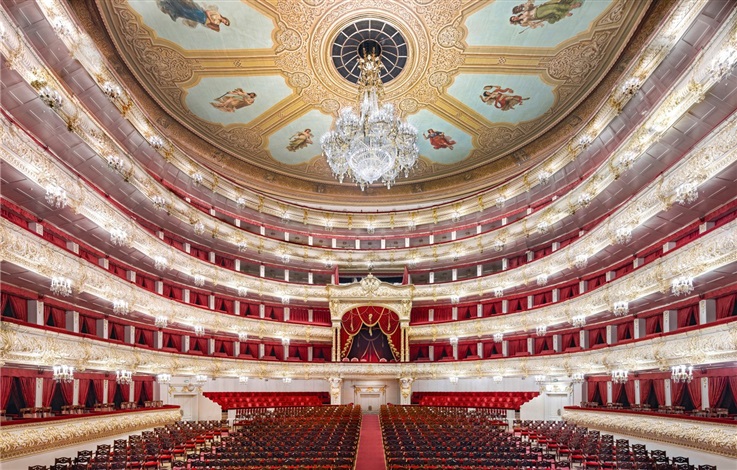
Artistic performance, spatially represented by the theatre, is the counterpoint to that status-quo, challenging it and extending its boundaries even from within the ideology’s own architectural representation (Fig. 2).

candida-höfer-bolshoi-teatr-moskwa-ii

Fig. 2 Candida Höfer, 2017. Bolshoi Teatr Moskwa II. [70.9 x 102.8 in., 180 x 261,3 cm, Chromogenic print, Edition of 6]

Höfer’s images of interiors is all the more interesting because architecture (or at least it’s celebration) is often communicated in media as the external, public façade, although it is equivalently – if not more so – the interior of buildings which embodies culture. Not least because we spend almost all our time inside of buildings and not outside.

Höfer’s early work looked at the visual cultural changes which migrant workers from Turkey were bringing to Germany, from which exploration she arrived at the impact of the built environment on people. Public and semi-public spaces became her photographic subjects, be it waiting rooms at railway stations or opera houses, iconic architecture or the city milieu. Through this work “she also realized that paradoxically the impacts of architecture are most intensely present when people are not in the image” (Galerie Zander n.d.).

Höfer’s detached photographs investigate not only forms and structures of spaces, but minute details, creating personal portraits of these spaces (idem). These personal portraits would appear to respond to and challenge the question why such an “anti-personal aesthetic has become so dominant in international art photography at the turn of the twenty first century” (Soutter 2018: 37).

In fact, these images take time to discover, and “when seen live, rather than in reproduction, the sharpness and detail almost boggle the mind” (idem: 45). I can vouch for this.

The question arises whether or not Höfer’s objectivity is a mask?

The viewer is given a sense of having maximum control over the space, with no sense of distortion. A cool light permeates the images producing an identifiable clinical style and as a body of work they “form an archive of power and privilege” (idem: 45).

Critical analysis of her body of work is offered little insight from the photographer herself.

“There is no explicit, voluntary choice on the spot or in the lab according to the historical context of the space, … I assume it is the space as space that drives such decisions.” Candida Höfer (Kennicott 2011).

Probed on the motifs in her images of interior spaces and her “psychology of social architecture” by art writer Elena Cué, the photographer responds “I am primarily interested in visual relationships within each singular space and the layers of use visible in that space. If over time my aggregated work contributes to broader insights, then that happens so to speak behind my back”. And when asked about the absence of people making them appear even more present, she reveals that this came out of a necessity “to avoid bothering people while I am working” which ultimately became a lesson about presence through absence (Cué 2016).

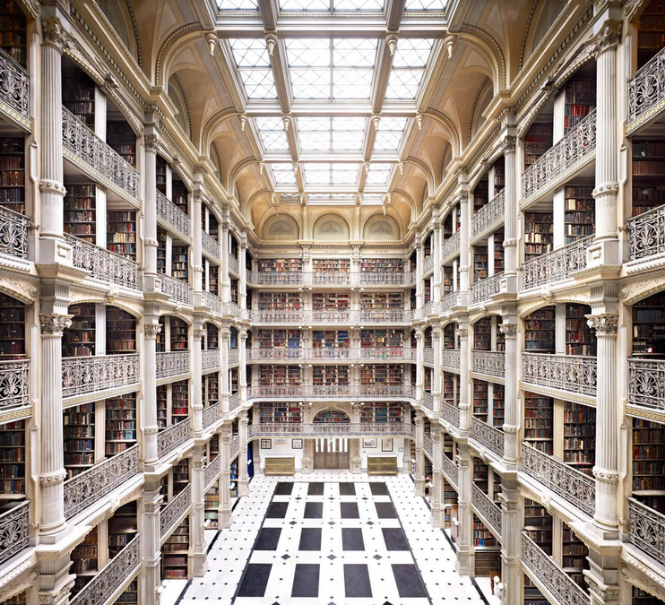
As with Bernd and Hilla Becher, the interpretation of the work seems to be handed to the reader of the visual text, which is left vulnerable to appropriation. This vulnerability is also a mask, as Höfer’s disembodied approach does not readily permit personal projection into the space (Fig. 3).

Hofer Peabody

Fig. 3 Candida Höfer, 2010. George Peabody Library Baltimore. [71 1/2 × 77 3/8 × 1 3/4 in, 181.6 × 196.5 × 4.4 cm, Chromogenic print] (National Gallery ofArt, Washington, D.C., Collection of Robert E. Meyerhoff and Rheda Becker)

Furthermore, “the images allow us to contemplate privilege, but they also aspire to belong to it, to go on the walls of spaces just as loaded as those portrayed” (Soutter 2018: 46). In such light, are the images then loaded with hypocrisy, or, alternatively, are they challenging the art world which revers them?

In her discourse on ‘Objectivity and seriousness’, whilst discussing Höfer’s work and the question of criticality, Lucy Soutter raises many questions, not least of which “is whether to represent something as objectively as possible is any more likely to produce a critical image than a celebratory one?” and in responding to her own question, reflects that many western readings consider Höfer’s images as “critical allegories about culture” (idem: 47).

Other interpretations consider them more celebratory. In his Washington Post review of a 2011 exhibition of Höfer’s work at the Baltimore Museum of Art, Philip Kennicott considers that “Höfer’s large-format photographs, with their deeply saturated color and extraordinary detail, have become a curious way to brand buildings, give them status, make them “celebrities.” There is something boosterish in using Höfer, whose work resists magazine-style loveliness, for cultural cachet, as if she can do for buildings what Andy Warhol did for celebrities.” (Kennicott 2011).

It could be countered that Warhol, after Abbott, was looking for the new heroes (Sutherland 2019) and anyway, who knows if Höfer is looking for heroes, or villains, or is just simply looking?

Kennicott comments on the disquieting uncanniness of the images which are “as haunting as they are stunning but also very chilly” and asks if through this ambiguity the photographer is “trying to idealize cultural institutions or reveal them as dead space or archaeological remains”? In conclusion, he considers that the images “want to say more, even if their urge to speak leads to ambiguous statements” and that there is a “sharper edge to these images, a hostility almost, that is bracing” (Kennicott 2011).

Patience Graybill in her study of Höfer’s library images (a subset of her ‘portraits of archival spaces’) posits that the photographer uses both “photography’s documentary attributes in historical archives or scientific studies” and “the medium’s more subjective aspects to make fictional, narrative images illustrate abstract or social concepts through their concrete subjects.” (Graybill 2007: 40).  She considers that the recurrent subject of archival spaces inherently aligns Höfer’s work to cultural memory, or the collective negotiation around preservation of cultural inheritance, within the “arsenals of memory” of Western civilization (idem: 43).

Nevertheless, seen individually without knowledge of Höfer’s own photographic archive, Graybill suggests that the images “have only limited ability to postulate on the social significance of modern archival spaces”, partly because Höfer’s emphasis on specificity does not allow an individual image to generically represent all archives. Paradoxically, it is this specificity, or attention to detail, which leaves “viewers to puzzle out Höfer’s ambiguous pictures for their symbolic gestures and subtle implications”. It is, however, within the context of her body of work, that single images reach their potential “to reflect on the practical and symbolic functions of archival spaces in modern societies”. (idem: 45).

In consideration of Höfer’s body of work for the archives of women artists research and exhibitions, Pauline Gueland remarks on the photographer’s style being hallmarked “by a head-on treatment of an uninhabited architectural space” with the vanishing point dead centre of the image and often enhanced by a mirror effect from ceiling to floor. The question arises from any critical overview whether or not an entire oeuvre can be stamped with a singular hallmark, given that a body of work develops over decades, and cultures, artists and technologies change over time. Nevertheless, Gueland clearly identifies that in this “rigorous archival work, each photograph can only really be understood by its belonging to a much larger corpus.” (Gueland 2013).

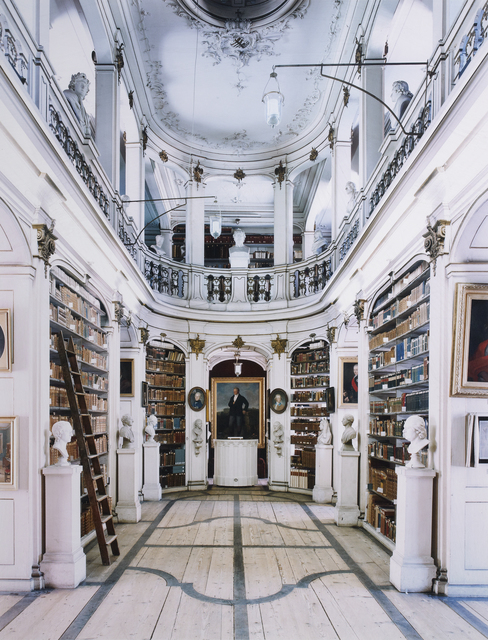
As Lucy Soutter points out, critics often argue that Höfer’s “spaces do not invite us to project our own bodies into them but rather to contemplate them in the abstract (Soutter 2018: 46). Indeed, not all of the oeuvre takes this stance, as Patience Graybill remarks on the photograph Anna Amalia Bibliothek Weimar II, 2004 wherein Höfer “adopts a reverent sort of low-camera position” (Fig. 4). Here the viewer can enter into the image and feel the “the weight of cultural history” whilst gaining insight into a social inheritance propagated from the eighteenth century (Graybill 2007: 48).

herzogin anna amalia bibliotek Weimar 2 2004

Fig. 4 Candida Höfer, 2004. Herzogin Anna Amalia Library, Weimar II [87 2/5 × 70 9/10 in, 222 × 180 cm, Chromogenic print, Edition of 6]

This image (Fig.4), as well as more intimate ones of personal study spaces within libraries, or archives, can indeed be approached, in contrast to the often cited large volume of works wherein the viewer feels suspended in mid-air, disembodied, or uninvited to enter the image (Fig. 3).

As many critics point out, it is only once considered within this body of work, or in dialogue with other images -such as in the Galeria Helga de Alvear exhibition About Structures and Colors which has just eight photographs – that the individual images become intrinsically and forevermore imbued with their hidden social commentary.

In this way Hofer’s diligently constructed personal archive, put together over decades, reveals itself as a mask for an absentee visual text. I can’t help but wonder if this is not, ultimately, one of the underlying principles of all objective photography? Is it that the objective photograph is a mask for a serious study of a cultural theme, which can only be revealed by considering together images from within the body of work?

On About Structures and Colors

I visited the exhibition early on Saturday 1 February 2020. Most Madrilenians would have been recovering from their Friday evening out or getting ready for shopping in the busy city centre. This left the Galeria Helga de Alvear perfectly empty for me to immerse myself in, what can only be described as, the sumptuous scale and detail of Höfer’s large format prints.

All-focus

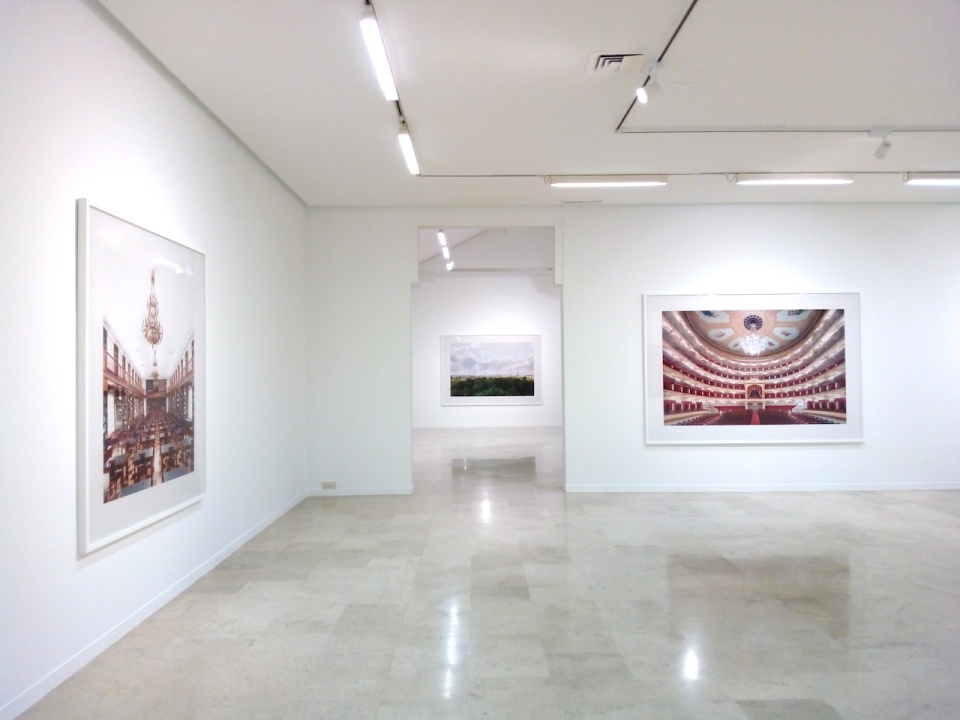
Fig. 5 Interior of the Galeria Helga de Alvear (01.02.20) – First room looking through to second room

In About Structures and Colors, between images from Moscow and Paris, Höfer “reflects on the representation of national culture and architectural will through elements such as light, structure and color as well as the idea of beauty itself” (Galeria Helga de Alvear 2019).

The white walls are punctuated by four basic ‘colors’ – red, white, blue and gold/yellow. A nod to national identity and power structures represented in the images of civic spaces of 19th and 20th Century Moscow and Paris.

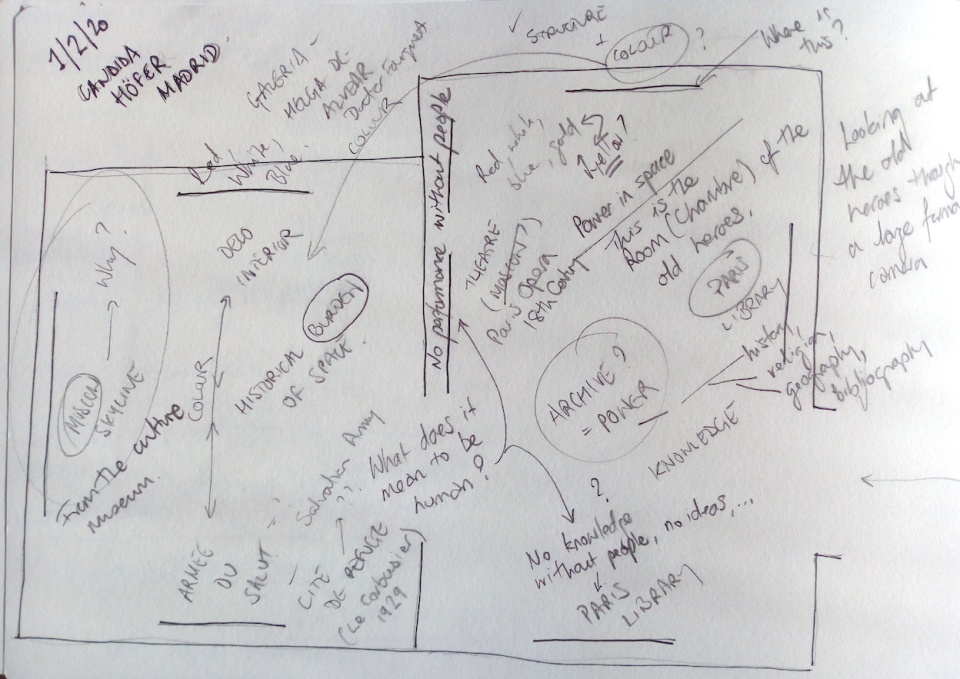
In the first room (Fig.5), immediate thoughts turn to humanity, to knowledge, performance and creativity. There’s no knowledge without people, no ideas, no reading in these empty libraries and no performance without stage players and audience (Fig. 6).

What does it mean to be human if you are absent? If all other humans are absent?

All-focus

Fig. 6 About Structures and Colors, Exhibition Layout, Entry in my Final Major Project Workbook (01.02.20)

A darker question doesn’t immediately arise, but could it be that this is the room of the old heroes? Or indeed, were they ‘villains’, these heroes of the bourgeois?

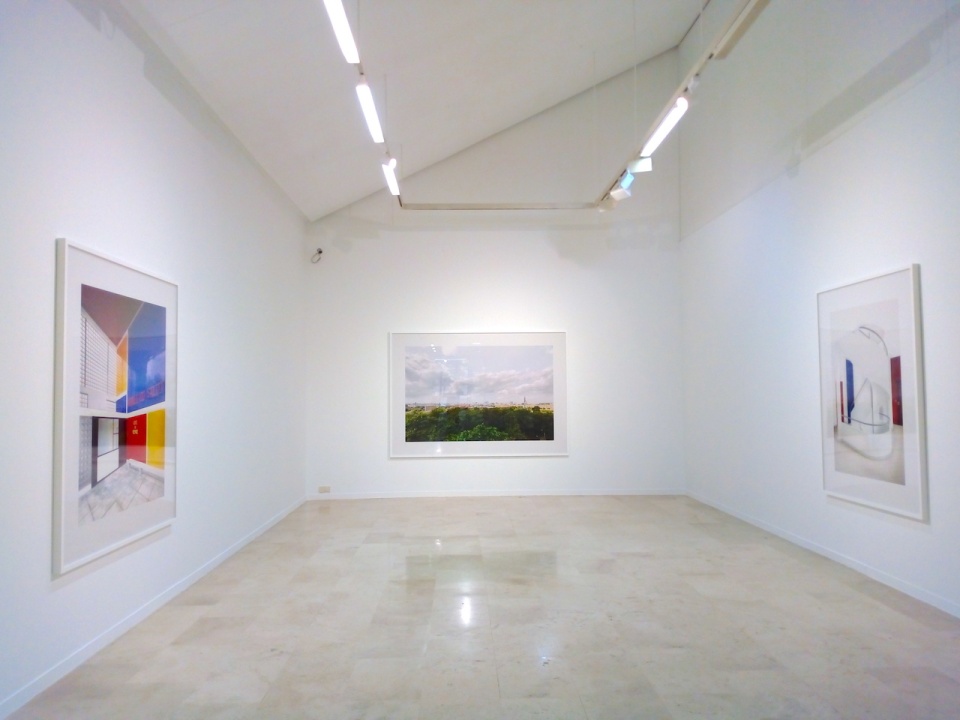
A second room only hints at more social concerns, where absent people are accommodated in places that are machines for living in. Two images of Le Corbusier’s Salvation Army Refuge in Paris (1929) are placed vis-à-vis, all the while flanking a view of the Moscow skyline, the only trace of the outdoors in the exhibition.

All-focus

Fig. 7 Interior of the Galeria Helga de Alvear (01.02.20) – Second room

Eventually the Moscow skyline, at first seemingly misplaced, would make sense.

Höfer is allowing her archive to enter into a dialogue that we are invited to listen to. Which in some ways appears ironic, because she never gave them the words to speak.

And in this manner, with the artist curating an exhibition of individual works from her oeuvre, we get to hear unspoken words.

References

Cué, E (2016) Interview with Candida Höfer. Available at https://www.alejandradeargos.com/index.php/en/all-articles/21-guests-with-art/511-interview-with-candida-hoefer [Accessed 2 February 2020]

Galeria Helga de Alvear (2019) Candida Hofer: About Structures and Colors (28.11.2019 – 08.02.2020). Available at http://helgadealvear.com/en/exhibitions/about-structures-and-colors/ [Accessed 2 February 2020]

Galerie Zander (n.d.) Candida Höfer: About the Artist. Available at https://www.galeriezander.com/en/artist/candida_hoefer/information [Accessed 2 February 2020]

Graybill, P (2007) Archiving the Collection: The Aesthetics of Space and Public Cultural Collections in Candida Höfer’s Photography. MoveableType, Vol.3, ‘From Memory to Event’, UCLPress, pp.40-70

Gueland, P (2013) Archive of Women Artists Research and Exhibitions: Candida Höfer. Translated from French by Simon Pleasance. Available at https://awarewomenartists.com/en/artiste/candida-hofer/ [Accessed 2 February 2020]

Haran, B. (2010) Homeless Houses: Classifying Walker Evans’s Photographs of Victorian Architecture. Oxford Art Journal, 33(2) June 2010, pp.189-210

Kennicott, P. (2011) Review: ‘Candida Höfer: Interior Worlds’. Available at https://www.washingtonpost.com/lifestyle/style/review-candida-Höfer-interior-worlds/2011/11/16/gIQAzMDRSN_story.html [Accessed 1 February 2020]

Soutter, L. (2018) Why Art Photography? Second edition. Abingdon: Taylor and Francis. ISBN 978-1-13828263-6

Sutherland, G. (2019) Looking for the new heroes (Berenice Abbott: Portraits of Modernity, PHotoESPAÑA 2019). Available at https://gordonsutherland.home.blog/tag/abbott/ [Accessed 2 February 2020]


07.10.19 > Visualising Agency through the Photographic Medium

As part of the Sustainable Prospects module, I’m collaborating with a group of fellow MA students on a ‘live brief’ for a company that develops design, information, and wayfinding solutions to integrate people, movement and places. Their main clients are city administrations and large campuses such as universities, arenas and festivals.

We are responding to the company’s brief “What does agency look like in the context of a smart city future?”

Initial discussions within our small collaborative team of four photographers [Amy Eilertsen / Christopher “Buzz” Matthews / Marco Montalto / Gordon Sutherland] provided insight into a possible vocabulary for defining or describing agency.

I chose to collaborate on this pitch because it can also directly inform the development of my research project work which explores the concept of digital space in smart cities, which started by exploring the portals in society through which we enter the datasphere and is intended to lead to documentation, representation, and probing of life in a smart city. GS

In particular, Marco – with his background in social sciences – was instrumental in seeding our early discussions with underpinning words such as intentionality, automatism, willfulness, awareness, to name just a few.

From this collaborative discussion, we concluded that advancements in information technology are expected to become prevalent in smart cities, in particular artificial intelligence, which turned our discussions towards concepts of freedom and control. Our conclusion? Whereas artificial intelligence is developed as a benefit for humankind, it is a double-edged sword.

With these discussions in mind, my personal contribution revolved around two aspects of visual language: firstly, how other forms of visualization, such as infra-red photography, can be use to represent one or other side of that sword and, secondly, how a word cloud could help us to define a starting point for a mutually agreed concept of agency for us to work with. From the concept of a word cloud, I proposed that each of us research 5-6 images which – taken from our own understanding of the photographic language which we individually speak – we personally consider as an expression of agency.

The following images and annotation describe my contribution to that group discussion.

Bad_dreams_bression_ayesta

Fig. 1 Carlos Ayesta & Guillaume Bression (2011-2016). From the series ‘Bad Dreams?’

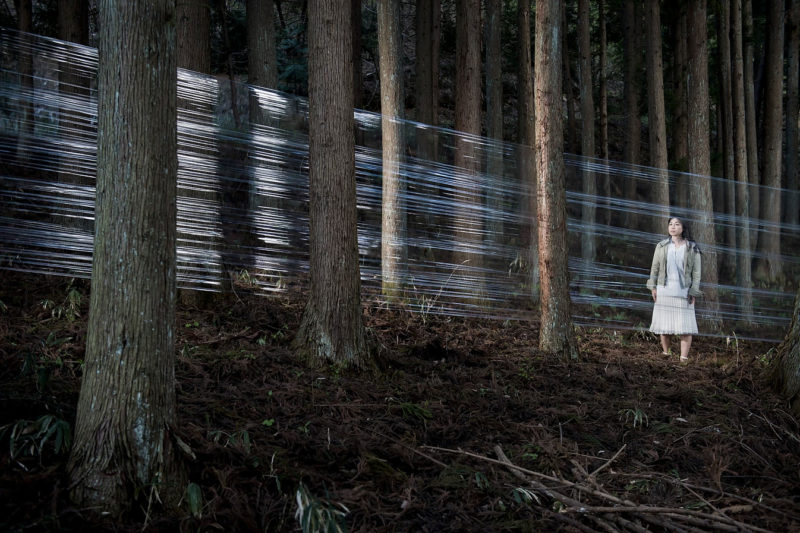
One of the challenges of finding a visual vocabulary for agency, or indeed anything which cannot be seen or felt, is to make the invisible become visible.

In their series Bad Dreams? (Fig. 1) Carlos Ayesta & Guillaume Bression asked how they could “depict something not seen or felt” [Thessaloniki Museum of Photography 2018: 124].

“Instead of adopting a documentary approach to this project, we decided to stage the photographs using plastic bubbles and cellophane wrap to reveal the ‘invisible’. Here, fiction reveals reality, not vice-versa.” Carlos Ayesta & Guillaume Bression (idem)

With this project, Ayesta & Bression are asking former occupants of Fukushima to come face to face with the invisible barriers that prevent them from returning home, and for whom “the affected communities, countryside and forest are actually divided between those now accessible and those to which entry remains prohibited (idem).

Abstractly, however, this has connotations for agency and wayfinding, regarding where and how you are guided to where you may go, or away from areas where you cannot go.

“Considering the invisible digital blocks and nudges that could direct human flow and shape decision making processes, and hence shape human agency in the smart city, I imagined physical representation of wayfinding through installations. This concept emerged as a natural parallel to the imaginary digital cloud I had introduced for my series ‘The Broken Places’ (Sutherland 2019).” GS


Erickim_example_cycling

Fig. 2 Photographer uncited. Date unknown.

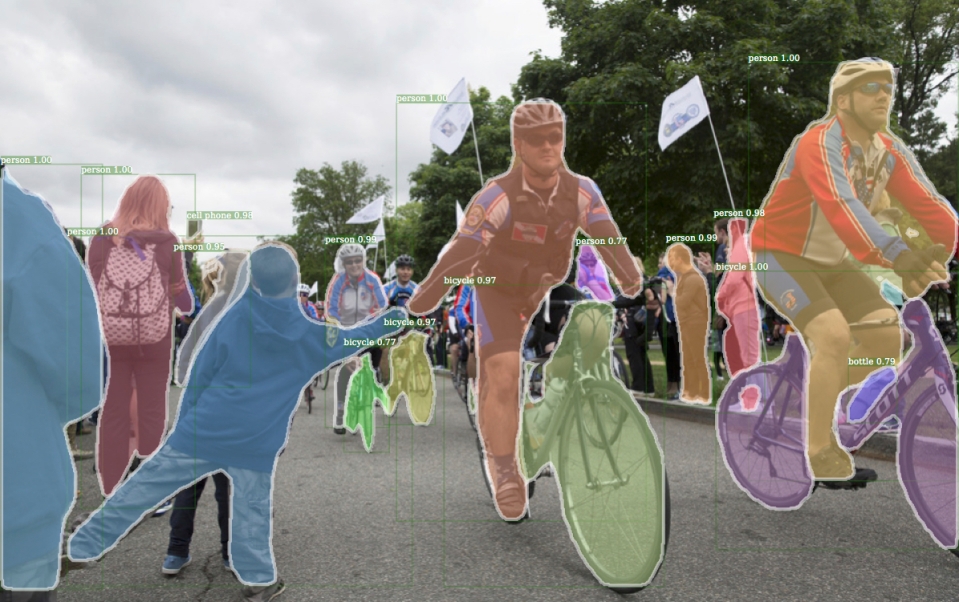
Contemporary street photographer Eric Kim manages to stir emotions and cause debate around both his photography and his commercial success. Kim is prolific, vocal and visible. An online search for ‘eric kim photographer’ will produce a mixture of comparisons with Gilden and Parr, accompanied by vocal rants and raves about Kim’s work and his success (Quillinan n.d.).

Kim uses social media and open source information to communicate his vision of photography and lifestyle, as well as delivering workshops at academic establishments or in global locations [Kim 2019a]. In terms of sustainable prospects, Kim makes a living from photography by commercializing a niche [Kim 2019b].

However, his work and writings are not purely commercial, but also topical, as well as philosophical.

In his article on photography and artificial intelligence he reflects on the future of humanity (Kim 2018) and what could otherwise be called a “comingled evolutionary path” (Prabhackar 2017) between humans and machines, as the distinction between humans and machines becomes imperceptible.

Kim explains that his interest lies in “how we can use computer vision (how computers see images, objects, and the real world) to augment (increase) our own human vision- to see the world more vividly, and to ultimately make better photos.” (Kim 2018). Within his post he considers the idea of image segmentation technology (Fig. 2) as one of the ways in which computers see.

In considering image segmentation, I imagined what the application of colour theory could means in terms of human agency. The breakdown of the spectrum of colour as a visual marker of individualism, collectivism, collaboration, support, ecology, health, spectatorship, participation, to name a few of the inclusive elements that can be imagined as benefits of a future smart city lifestyle. GS

Screenshot 2019-10-06 at 16.25.28

Fig. 3. Annie Tritt – The New York Times. 2012. Shotspotter Headquarters, California

Photographer Annie Tritt established herself through photojournalism, today focusing more on portraiture in entertainment and arts, corporate portraiture, as well as social and personal projects, such as ‘Transcending Self’ which explores transgender and gender expansive youth.

Tritt’s clients have included Billboard, Hollywood Reporter, New York Times, Wall Street Journal, Paper, INC, Fortune, Backstage, London Guardian, London Telegraph, Fader, M Le Magazine du Monde, Wired Italy, Der Spiegel, Stern, Interscope Records, Sony Records (Tritt n.d.).

The photographer, author and publishing executive Rick Smolan orchestrated over 100 photographers and researchers to collate the images for “The Human Face of Big Data”, a book which uses photography to visualize how “life is changing in a world filled with a never-ending stream of data”. Smolan has remarked that “big data will have a bigger effect on humanity than the Internet” since data allows for anticipation and problem solving through knowledge about the world (Sloan 2012).

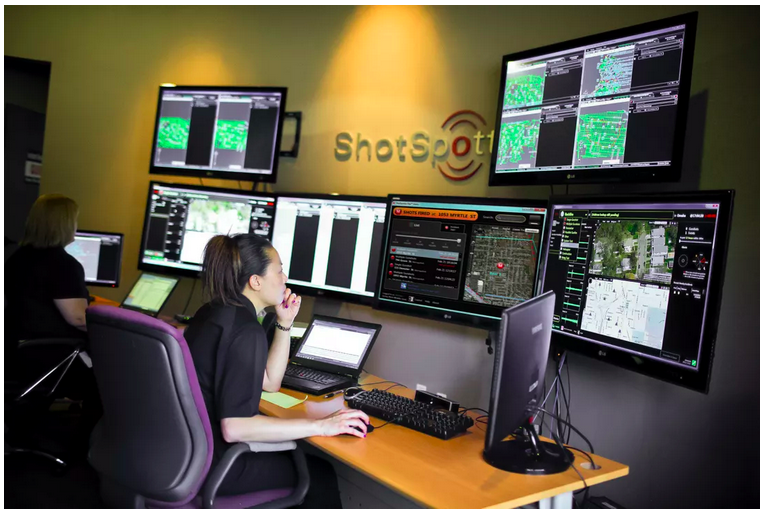
One of Tritt’s images for The New York Times, depicting a monitoring station for the Shotspotter system, is included in Smolan’s book (Fig. 3). Shotspotter uses acoustic sensors located around neighborhoods to record the blasts of gunshots. The system triangulates the sounds, pinpointing the sources of the blasts on a map, thus helping authorities to rapidly locate crime scenes. Using the information from the sensors, high-speed telecoms and number crunching, the staff at the company’s headquarters can remotely pinpoint the shots to a precise location in seconds, so that “instead of police arriving on the scene a half-hour later, they can be there in under two or three minutes”. (ITBusiness 2013).

Tritt’s image (Fig. 3) is representative of how authorities in highly digitally connected societies can use data flows to adapt public services and infrastructure to the dynamics of city life: it is a photo-documentary approach to raising questions around human agency and the role and responsiveness of city administrations and public authorities.


Tom Drahos

Fig. 4. Tom Drahos (1986). From the series ‘Paris suburbs, peri-urban spaces of the Paris region’

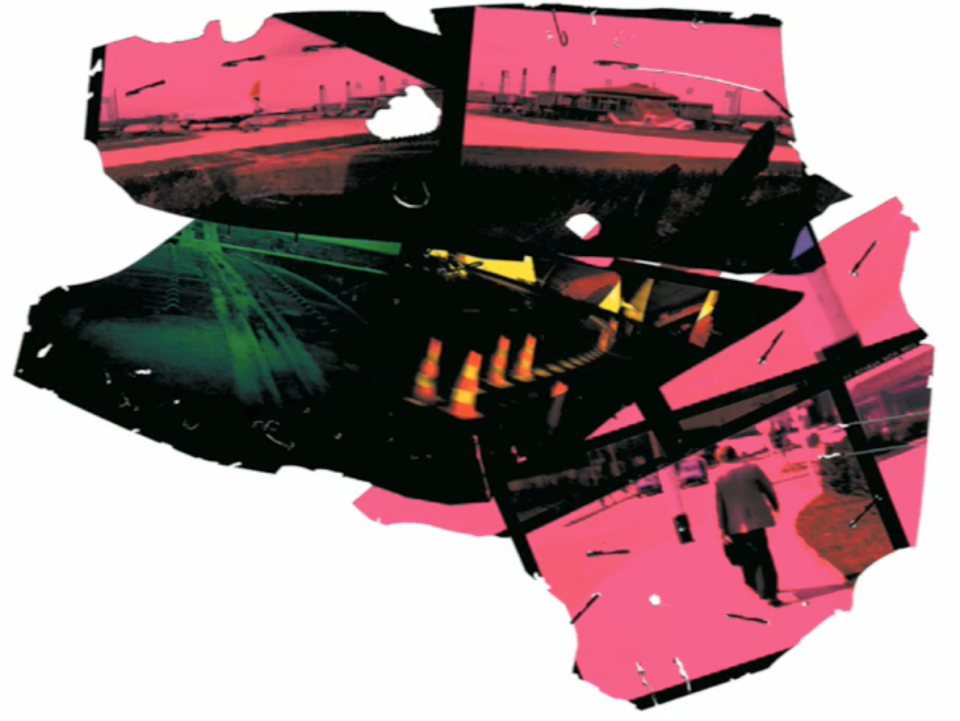
Photographic commissions in the form of preservation photography visually document an epoch. In a country characterized by innovation and industrial development, indeed a country which is one of the multiple birthplaces of photography, the French Délégation à l’Aménagement du territoire et à l’Action régionale (the Inter-ministerial Town and Country Planning and Regional Action Delegation) dispatched 29 photographers of different photographic slants into the field to “document the French landscape of the 1980s” (Bibliothèque nationale de France n.d.).

Commonly known as The DATAR Photographic Mission, it was a descendent of the great photography missions such as the 1851 Heliographic Mission and the 1935-1942 Farm Security Administration’s portrayal of the Great Depression (idem).

In representing the cityscapes of the Paris suburbs, Czech photographer Tom Drahos presented an alternative vision of these urban landscapes, “anchored in time, but free floating in space” (idem). His concept of framing space, but not the compositional image itself, reveals an exploded landscape that refers at once to the multi-foiled individual experiences of the urban landscape, as it does to the co-existent societal perspectives. Each of these perspectives holding its own truth. GS

This concept of co-existence of viewpoints and experience resonates closely with the dynamic promised by technology in smart cities, touching again on the key words identified such as individualism, collectivism, awareness and conscious decision making.

Down-Under-Tommy-Vohs-640x480

Fig. 5 Tommy Vohs. Date unknown. From the series ‘In Transit’

“I took to iphoneography like batter on a fish stick…a cohesive relationship only made stronger over time. It was natural and free flowing and came at a time in my life when I needed a distraction” Tommy Vohs (Carter 2012)

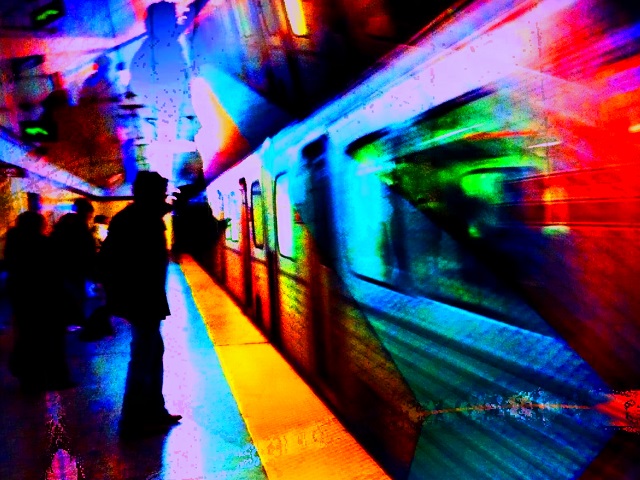
Vohs is a railroad careerist turned mobile photographer and has exhibited extensively in Canada where she resides (Idem). Vohs maintains her career on the railroads as well as exhibiting and selling her limited edition prints which are characterized by layers and saturated colours. Her images have been awarded in the field of mobile, iphotography and iPhoneart (Vohs n.d.).

I discovered the work of Tommy Vohs through Smart Cities Dive, part of Industry Dive (Industry Dive n.d.), a private sector business journalism platform that helps decision-makers stay ahead in competitive industries to spark innovation and growth in industry. GS

Smart Cities Dive researches visual material to “find photos that fit our content, reflect the human content of our work, and are dynamic, colorful, interactive, transformational, local, natural, and realistic, too” (SMARTCITIESDIVE n.d.).

As a business provider, Smart Cities Dive Managing Editor (formerly TheCityFix) identified the innovation in Vohs work and how it met their vision in terms of communicating the spirit of integrated mobility, a key component of smart city developments, with the likes of multi-modal integration of mass transport, cycling and walking. The use of Vohs’ work in editorial context is an example of corporate culture using art as a business media content.

“Vohs’s photography exemplifies this necessity for shared streets that cater to the needs of road users across diverse modes of transport. With an emphasis on public transport, Vohs’s work often features double exposures that juxtapose everyday scenes of urban mobility with bold color schemes.” Smart Cities Dive Managing Editor (idem)

The images presented in this post are taken from a series of images I put forward to inform our collaborative group work whilst we explored our individual ideas on the visual ‘definition’ of agency in the smart city of the future.

Each of them is representative of perspectives as seen by different practitioners, whether those working on commercial street photography, photo-documentary, art photography or commissioned preservation photography. These photographs represent the editorial use of photographic image from the perspective of research into social sciences and humanities or commercial business interests. As such, they represent aspects of the sustainable prospects of the individual practitioners.

In parallel, the images were selected to directly inform the development of my research project work exploring the concept of digital space in smart cities, which started by exploring the portals in society through which the population enters the datasphere, and is intended to lead to documentation, representation, and probing of life in a smart city.

Sources

Carter, J. (2012) A Day in the Life of Tommy Vohs – An Intriguing, Liberating and Inspiring Mobile Photographer. Available at https://theappwhisperer.com/2012/11/a-day-in-the-life-of-tommy-vohs-an-intriguing-liberating-and-inspiring-mobile-photographer/ [Accessed 6 October 2019]

EMBARQ Network https://www.smartcitiesdive.com/ex/sustainablecitiescollective/friday-fun-photographer-captures-spirit-integrated-transport/219991/

Industry Dive (n.d.) About Industry Drive. Available at https://www.industrydive.com/about/ [Accessed 6 October 2019]

ITBusiness (2013) 11 amazing images show ‘The Human Face of Big Data’. Available at https://www.itbusiness.ca/slideshows/11-amazing-images-show-the-human-face-of-big-data [Accessed 6 October 2019]

Kim, E. (2018) Brave New World of Photography and AI. Available at https://erickimphotography.com/blog/2018/09/24/brave-new-world-of-photography-and-ai/ [Accessed 6 October 2019]

Kim, E. (2019a) Eric Kim Workshops. Available at https://erickimphotography.com/blog/workshops/ [Accessed 6 October 2019]

Kim, E. (2019b) Photography Entrepreneurship Tips and Ideas. Available at https://erickimphotography.com/blog/2019/07/16/photography-entrepreneurship-tips-and-ideas/ [Accessed 6 October 2019]

Prabhakar, A. (2017) The merging of humans and machines is happening now. Available at https://www.wired.co.uk/article/darpa-arati-prabhakar-humans-machines [Accessed 6 October 2019]

Quillinan, B. (n.d.) Is Eric Kim full of sh*t? Available at https://onedgestreet.com/is-eric-kim-full-of-sht/ [Accessed 6 October 2019]

SMARTCITIESDIVE (n.d.) Photographer Captures Spirit of Integrated Transport. Available at https://www.smartcitiesdive.com/ex/sustainablecitiescollective/friday-fun-photographer-captures-spirit-integrated-transport/219991/ [Accessed 6 October 2019]

Sutherland, G. (2019) Beyond the broken places. Available at https://gordonsutherland.home.blog/2019/06/05/05-06-19-beyond-the-broken-places/ [Accessed 6 October 2019]

Sloan, P. (2012) Big data gets its own book: ‘The Human Face of Big Data’. Available at https://www.cnet.com/news/big-data-gets-its-own-book-the-human-face-of-big-data/ [Accessed 6 October 2019]

Thessaloniki Museum of Photography (2018). Capitalist Realism: Future Perfect, 28/09/2018 – 27/01/2019 (Curated by Penelope Petsini). Thessaloniki: University of Macedonia Press. ISBN-978-618-5196-35-6

Tritt, A. (n.d.) Website of photographer Annie Tritt. Available at (http://www.annietritt.com/ [Accessed 6 October 2019]


29.09.19 > On the search for new dimensions

I continue to take forward my study of spatial representation through photography, in particular the study of digital space. I’m planning to pick up more of the cinematographic, gaming and manga influences I’ve come across through my previous projects, such as ‘The Space Between’. I’m once again thinking of looking into ‘in-game’ photography as a depiction of space in the datasphere.

I plan to revise the proposal for my Final Research Project, and consider expanding my work from its current exploration of data flows in connected urban environments to an exploration, through non-anthropocentric photography, of how systems with intelligent algorithms ‘view’ the real world.

For these two avenues of exploration I’m thinking – at this stage of my research – of connecting with communities in the gaming world on the one hand, and to deepen my research into practical operations of smart city systems on the other.

Currently my final research project – The Digital Divide (Working Title) – is conceived as an exploration of human life in a digitally controlled environment, in a ‘Smart City’, for want of a better terminology, through the use of spatial representation:

The Digital Divide (Working Title) is a visual investigation of ideas, concepts, and critical theory surrounding the nature of digital space and human interaction with it. The project starts by exploring the portals in society through which we enter the datasphere and leads to documentation, representation, and probing of life in a smart city (Sutherland 2018).

In looking for new ‘dimensions’, I’m exploring research-based photography to identify methods that could inform my own approach.

Below two examples of photographers whose research approach can relate to my own project.

Artist and photographer Meret Wandeler focuses her photographic research on the transformations of urban fabric in suburban areas. Long-term photographic observation is a key approach in her practice, as is the collaborative nature of projects (Wandeler 2019a). Her serial projects are characterized by the fact that the research constitutes the final body of work.

Wendeler 2019

Fig. 1. Meret Wandeler/Ulrich Görlich, 2005, Elmar Mauch (Rephotography) 2007, Christian Schwager (Rephotography) 2009–2017, Example of overviews from ‘Long-Term Photographic Observation of Schlieren 2005-2020’ (Wandeler 2019b)

The ‘Long-Term Photographic Observation of Schlieren 2005-2020’ is an example of visual research into the ongoing processes of transformation in one specific community, located in this case in the Zurich Metropolitan Area.

Through urban transformation, initially evolving from a farming village to an industrial zone in the post-war period, Schlieren ended the 20th Century as a ‘non-place’, as globalization led to the abandonment of its industrial sites (Wandeler 2019b: 366).

Wandeler, in collaboration with Ulrich Görlich, sought to document the impact of a holistic urban redevelopment in the early 21st Century, with the pressure on land use and environmental degradation in Switzerland being high on the political agenda (idem: 368).

The project, centred around the method of rephotography (with the rephotography by Elmar Mauch and Christian Schwager), was the first photographic research project at a Swiss Art Academy in the emerging field of artistic research which became established in Europe at the turn of the millennium, mainly in Scandinavia, the United Kingdom and Switzerland (idem: 370).

Considering work of another artist, Melanie Manchot’s research-driven, lens-based artwork employs photography, video, film and sound. Manchot has stated that “Cameras, whether still or moving, are crucial devices shaping the construction of the work” and more importantly “are an organizing principle, an apparatus that becomes part of a set of relations I wish to create” (Parafin 2016).

Manchot’s methodology is built on the processes of exchange, contribution and collaboration. She often involves social groups, or communities, to create serial portraits at the boundaries of documentary and fine-art. The works constitute a discourse on the individual and social self (idem).

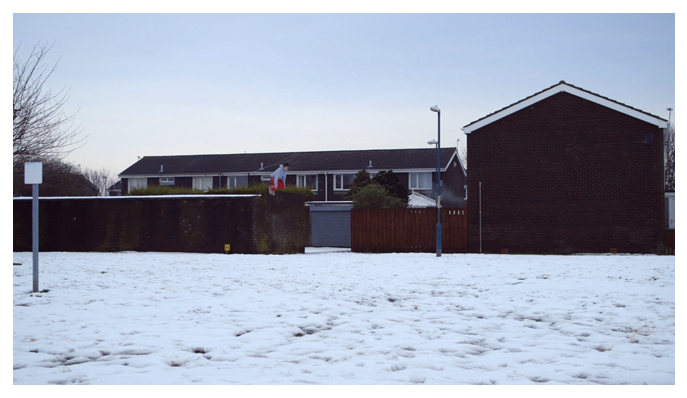
In ‘Tracer’ – a single channel projection and 3 channel installation, 19’45” in stereo sound – Manchot depicted the movements of parkourists as they sought out the opportunities and limits offered by constructed space to produce specific forms of physical interaction. As Manchot explains on her website

“The film draws attention to how human agency may act upon built environments and questions the authority inherent to architectural form” (Manchot 2019).

Manchot Tracer Still 2013

Fig. 2. Melanie Manchot, 2013, Still from Tracer (Manchot n.d.)

Tracer was funded by the Great North Run Moving Image Commission as part of the event’s culture programme and saw Manchot working “with a group of local parkour runners to re-imagine the architecture and spaces along the route” (Great North Run Culture 2013).

Long, slow sequences and overseeing viewpoints in the video serve as a reminder to the viewer of surveillance in public space, as well as our individual and collective role as voyeur on society. Stereo soundscapes offer alternative views into the physicality of parkouring as the impacts of human bodies on constructed space are revealed (Manchot 2013).

Sources

Great North Run Culture (2013) Melanie Manchot: Tracer. Available at http://greatnorthrunculture.org/aboutcommission198a.html?commid=63   [Accessed 29 September 2019]

Manchot, M. (2013) Tracer, 2013 – Trailer. [Video] Available at https://vimeo.com/220456235 [Accessed 29 September 2019]

Manchot, M. (n.d.) Tracer, Video Installation, HD, 19’43”. Available at http://www.melaniemanchot.net/category/tracer/ [Accessed 29 September 2019]

Parafin (2016) Artists – Melanie Manchot. Available at http://www.parafin.co.uk/artists–melanie-manchot.html [Accessed 29 September 2019]

Sutherland, G. (2018) PHO701 Research Project Proposal. Submitted for the MA Photography Module Positions and Practice, Falmouth University, December 2018

Wandeler, M. (2019a) Meret Wandeler. Available at https://www.meretwandeler.net/ [Accessed 29 September 2019]

Wandeler, M. (2019b) Schlieren: Spatial Transformation in a Suburban Municipality in Switzerland. In Framed Landscapes: European Photography Commissions 1984-2019. Exhibition Catalogue, Museo ICO, 6 June to 8 September 2019). Madrid: Fundación ICO.

23.08.19 > Joining the dots to reveal the photographer

In looking for a way forward for my art photography I need to step outside of my comfort zone, deconstruct myself, and understand – and explain – how I arrive at my visual artistic expression. How do I start from a theme, a concept, then move through exploration of subject matter, techniques and perspectives (further still explore my response to life), so as to arrive at the final emergent artwork: aka my artistic strategy.

My artwork unfolds into its photographic self on a support – a surface – whether that be the printed image hanging in a gallery, in a photobook, on advertising billboards, as a presentation during an artist talk or workshop, shown as a poster, as a projection, on digital screens, or as holograms: aka my chosen artistic surface.

In The Surfaces and Strategies of my Photographic Practice (August 2019) I attempt to explain and critically analyse how my photography fits together.

Asakusa #1 Blended B&W

Asakusa #1, Sunday 7 July 2019, Asakusa, Tokyo (© 2019 Gordon Sutherland)

16.06.19 > Looking for the new heroes (Berenice Abbott: Portraits of Modernity, PHotoESPAÑA 2019)

Berenice Abbott recorded the evolution of the New York cityscape in the 1920s and 1930s century as it morphed into a scaling metropolis. During this period New York was synonymous with modernism and the new understanding of urbanism and architecture.

IMG_20190616_130414

Fig 1: Outside the Fundacion MAPFRE

Oft named a successor to the documentary tradition of Eugène Atget, before her architectural oeuvre Abbott also did portraiture of the intellectual avant-garde during her time in Paris. It was at this time that she met, and learned of the work of, Atget. Abbott’s work straddled the Atlantic, maintaining connections between the old world and the new.

This exhibition covers her portraiture work, her documentation of New York and her later – more experimental – scientific photography, as well as being accompanied by a series of images of Atget (PHotoESPAÑA 2019).

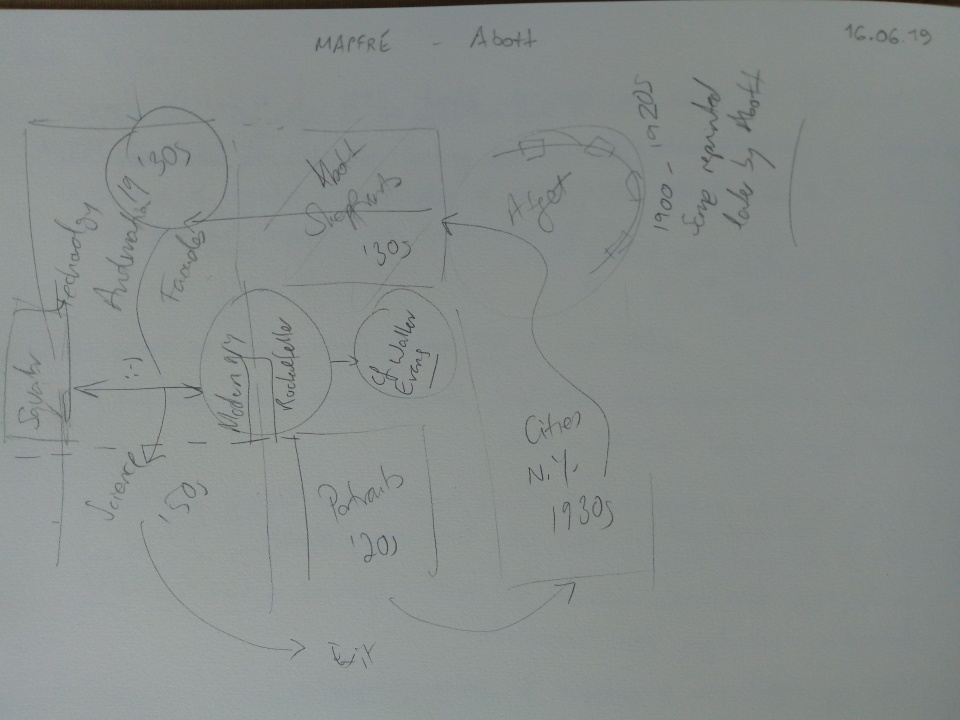
The exhibition is curated along these three bodies of work, in chronological order, interspersed by the Atget gallery, which allows transition into the gallery with the comparatively more understated images of shop frontages. Of particular interest, and effect, was the positioning of images of construction of the Rockefeller Building vis-à-vis those of the squalor which existed in the city following the Great Depression. Also visually effective was the transition from the modernist city of infrastructure, mass transit and automation, with the scientific photography of the 1950s.

All-focus

Fig. 2 Exhibition Layout, Surfaces & Strategies Workbook excerpt 16.06.19

In her essay Berenice Abbott: In-Between Visualities, the exhibition curator Estrella de Diego takes as her starting point Abbott’s two portraits of Eugène Atget, considers these images as being similar to documentary mug shots. She compares Abbott’s revisiting of this approach in portraiture, but with such diverse angles that each angle reveals the uniqueness and diversity of each individual, rather than placing them in a taxonomy, reflecting on the drive behind the nineteenth century archival approach as a mask for control (de Diego 2019: 11).

Although the exhibition includes 11 images by Atget, in my photographer’s response to this exhibition I felt disinclined to focus on the mutuality of the relationship between the two photographers, focusing rather on those aspects of Abbott’s work which inform my own gaze, namely looking at the transitory nature of existential space from different perspectives. My starting point of response is therefore exactly the same as that of the curator, although I took my own path as my reading of the exhibition and the oeuvre as a whole is influenced by what I bring with me!

I can relate to de Diego’s consideration that “[concerning Abbott] … when taking a photograph: the character, the building, the scene documented become part of her own life by virtue of her being there and looking on as she records the image. She was there; the story has been absorbed in her own biography.” (idem: 12).

My own images are at once documentary, or preservation, photography, as much as they are constructed stages where the individual and distinct – though sometimes overlapping – narratives of both the author and the reader of the visual text take place.

Portraiture

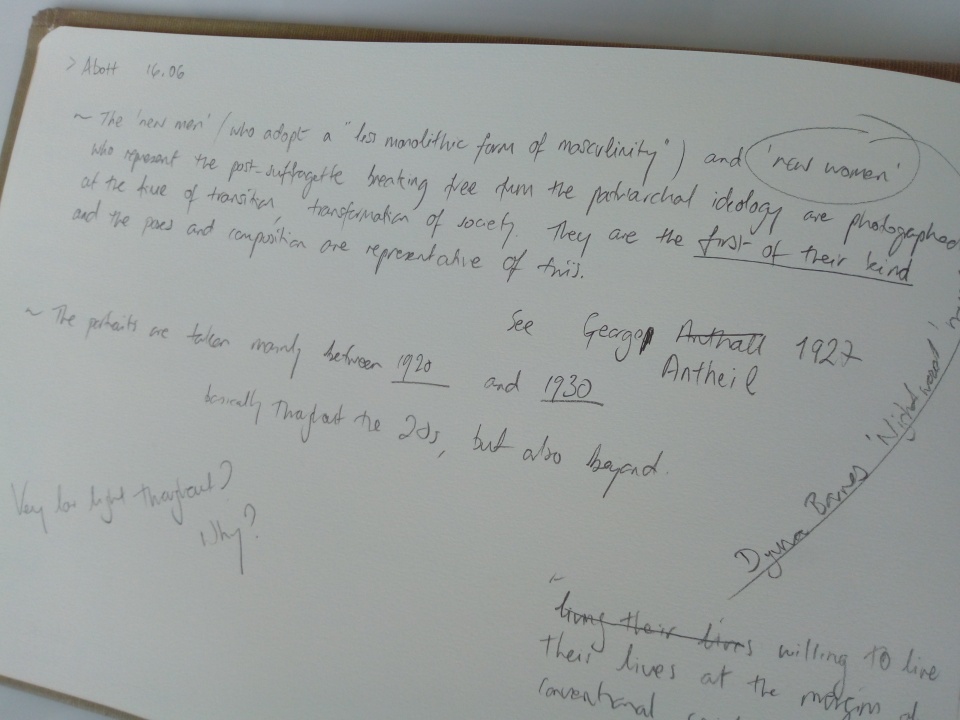
It is clear, following de Diego, that in the case of Abbott “her distinctive photographs function as a privileged archive of the avant-garde and its pioneers”. In other words, they are portraits of the new heroes, such that the images constitute “posterity before posterity itself” (idem: 13).

All-focus

Fig. 3 The ‘new men’ & ‘new women’, Surfaces & Strategies Workbook excerpt 16.06.19

My own, no doubt coloured, reading of Abbott’s portrait photography is that the subjects have a distinct air of knowledge that things are not going to stay the same forever.

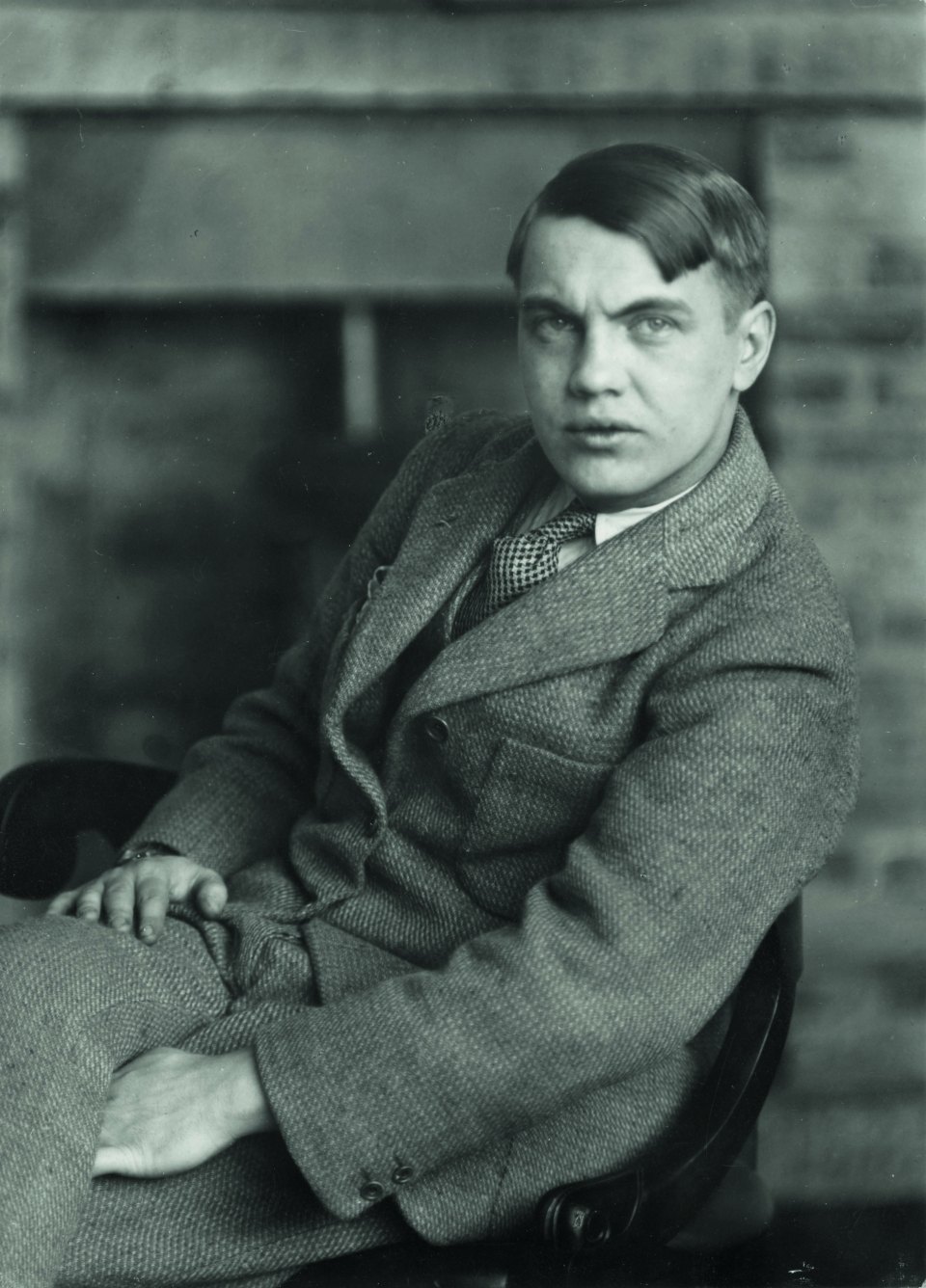
abbott george arheil

Fig. 4 Berenice Abbott, 1927. George Antheil

Abbott’s portraits constitute a gaze of modernity, emerging in the late 1920s and early 1930s. What is captured is the diversity in society that would only become truly established at the end of the 20th century, Afro-Americans, feminists, homosexuals, and ‘new-men’ (today coined metrosexuals and revealed by Abbott’s images as willingly ‘fragile’, or sensitive), each liberated to be who they are, and who they want to be, in society (idem: 23).

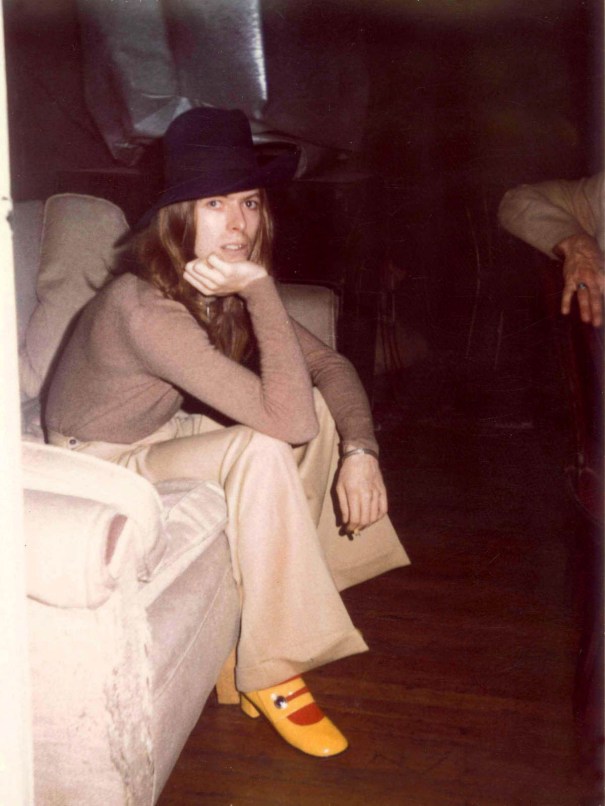
Further, de Diego considers that the portraits as having a “family air that recalls the fabulous archives of Andy Warhol’s polaroid portraits” (idem: 15).

I would posit that the similarities are to be found in the stance of the photographer both as one of, and being amongst, the new heroes. In the case of Warhol, this is the avant-garde of almost the entire latter half of the 20th Century.

Indeed, in the words of Warhol, “The United States has a habit of making heroes out of anything and anybody, which is great” (Golden 2017: 249).

warhol bowie 2

Fig. 5: Andy Warhol, 1971. David Bowie. (Golden 2017)

Changing New York

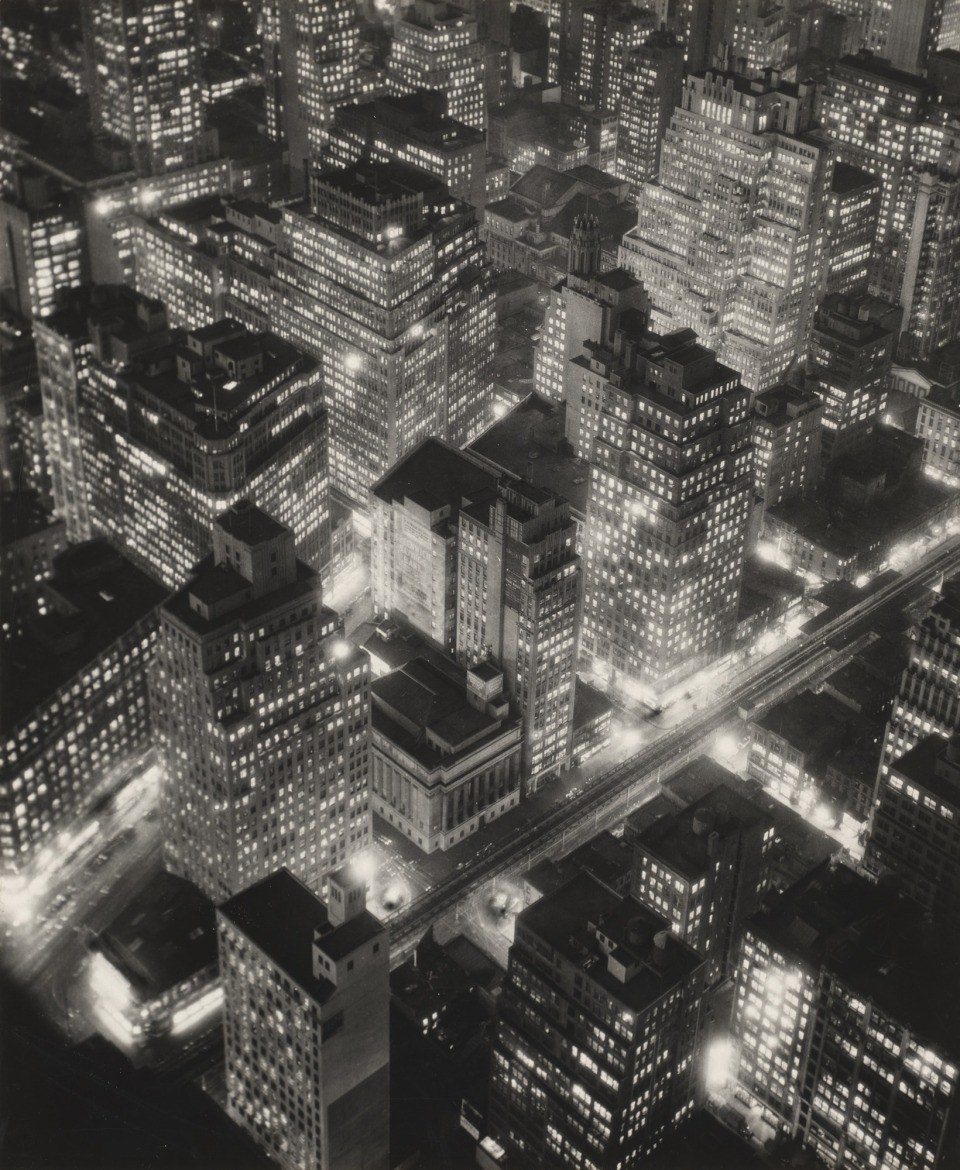
When it comes to a portrait of a city, de Diego states that Abbott’s “images of New York anticipate the monumental nature of the architecture of the new cities” considering her as the undisputed master of skillful and poetic photographic portrayal of these buildings as the new structural heroes of their time (de Diego 2019: 15). In New York, after de Diego, Abbott constructs the biography of a metropolis “almost before it has taken shape”.

It could be counter argued that – as opposed to capturing posterity before posterity – this is simple enough to state in hindsight, when documentary images can be curated to tell the story of how society arrived at its present status-quo.

Nevertheless, it is the timing of Abbott’s body of work that is compelling. New York was in transition and Abbott chose the city as her subject at that time. This is the approach to take to be avant-garde in documentary or preservation photography: your subject matter has to be avant-garde, or situated in an avant-garde context, at which point in time, as de Diego quotes Terri Weissmen, it is possible to capture “a moment or a manifestation of cultural transformation” (idem: 15).

Through alternative perspectives, Abbott’s images reveal distinct New Yorks – the city climbing to the heavens and the earthly activities that take place at ground level. Or, as de Diego comments, her images are characterized by the “dissociation between the two, the stage curtain and the floor”.

Tellingly, de Diego parallels Abbott’s portraits of people at the time of societal transition with her portrait of a city transitioning into modernity, “Just as she strips bare the essence of her sitters in each of her photographs, despite the lack of components and order required by an archive, Abbott extracts the pieces used used to assemble a city on the brink of existing and isolates them” (idem: 16).

Points of view

According to de Diego, Abbott does more than document New York, rather she documents the city from her own position as a woman breaking through the walls of the patriarchal society, stepping into her emancipation, “free to transgress what is expected of her”. In doing so she creates her own life story (idem: 18).

Abbott has the eye of modernity, because she is herself one of the new heroes of that emerging modernity. Much of the early work she did in New York prior to 1935 was self-financed, until she received a contract from the Federal Art Project which would allow her to focus on documenting the city’s transformation, leading finally to the 1936 exhibition Changing New York (idem: 18).

Nevertheless, Abbott’s New York would continue to change after her work was done. The transitory nature of the cityscape and city life which it stages, is well documented by Abbott’s House of the Modern Age, Park Avenue & 39th Street (13 October 1936), which existed only for a few months, and for which aspiring New Yorkers visited to view its mod-cons (Smith: 31).

2007-53

Fig. 6: Berenice Abbott, 1936. House of the Modern Age, Park Avenue & 39th Street (Smith 2011)

Formally and compositionally different, but contextually similar, Abbott’s perspective in House of the Modern Age resonates with Walker Evans’ 1931-33 series of Victorian Houses, even as the “future of the American single-family house looked less like Abbott’s image than like William Garnett’s view of a gigantic development some twenty years later” (idem: 33).

garnett large

Fig. 7: William A. Garnett, 1953-56. Housing Development, San Francisco, California (Smith 2011)

Abbott’s image (Fig. 6) again captures posterity before posterity, just at that moment when skyscrapers were becoming the only financially tenable option in midtown New York. Similarly, Evans’ images of Victorian houses ultimately reveal social fissures through abstraction, by approaching the depression indirectly through adoption of an archival stance of hyper realistic depictions of buildings which were about to disappear (Haran 2010).

Although, according to Baldwin (2013), Abbott photographed much of New York in a manner usually as understated as that of Atget, much of the work is also celebratory of the emerging metropolis. Her series Changing New York jumps from one mode of seeing to another, from atop skyscrapers to below bridges, to straight photography of shop-fronts, making the work a dizzying document of a city under constant construction.

abbott west side large

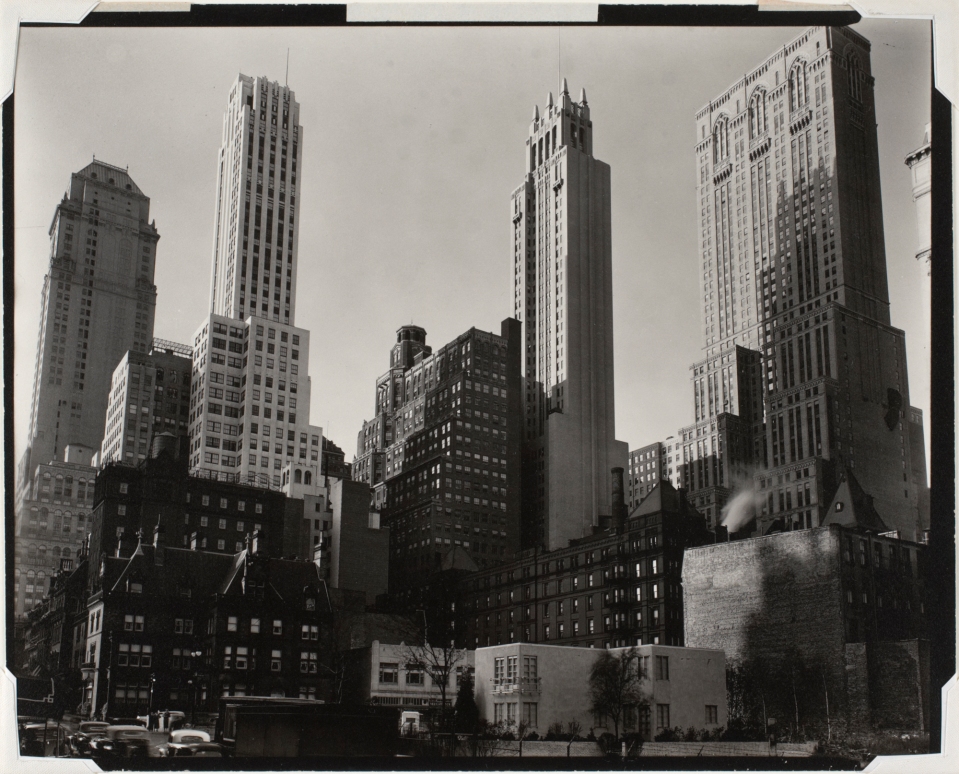
Fig. 8: Berenice Abbott, c. 1932. The West Side, Looking North from the Upper 30s.

By 1939 Abbott’s radical visual poetry was already being watered down, as the publishing house E.P. Dutton & Co. selected 97 images of the city in the format of a guide, releasing it without the inclusion of images of the poorest and most deprived parts of the city, nor with the captions penned by Elizabeth McCausland (de Diego 2019: 18).

The city’s continuous transformation – if not so much through its cityscape as through its cultural transformation, would be documented by later photographers – the next generations of heroes – such as William Klein, Joel Meyerowitz, not to mention artists such as Andy Warhol.

Returning to the start, with Atget, de Diego posits that “Abbott was fascinated by Atget as a witness of his time. Perhaps it was from him that she learned about the autobiographical involvement required by all documentary photographers, and how one must look with one’s whole being in order to capture a reality that is always partial, always a half-truth” (idem: 20) and asks if all documentary work is not, finally, “an autobiographical experience for the photographer taking the photo?”

If so, how should the works of Abbott, Atget, and others be read in relation to documentary, autobiographical stance, and the concept of the photograph as a stage and performance (idem: p21).

In the context of that question, de Diego posits that Abbott’s portrait of New York is a self-portrait of the photographer’s own liberty.

All-focus

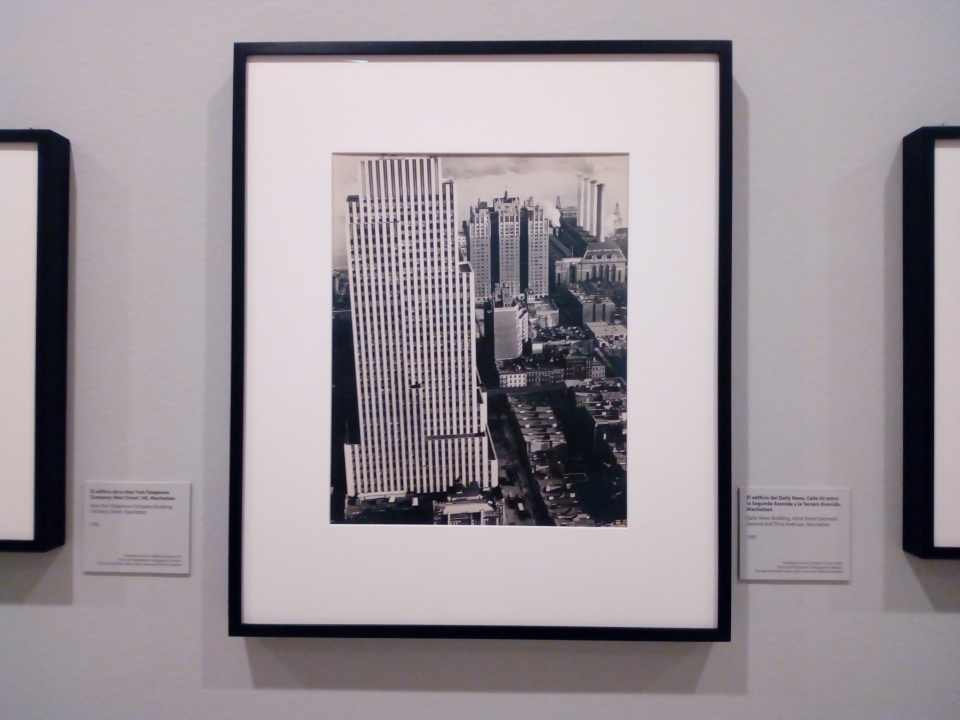
Fig. 9: Berenice Abbott, 1935. Daily News Building, 42nd Street between 2nd and 3rd Avenues, Manhattan

All-focus

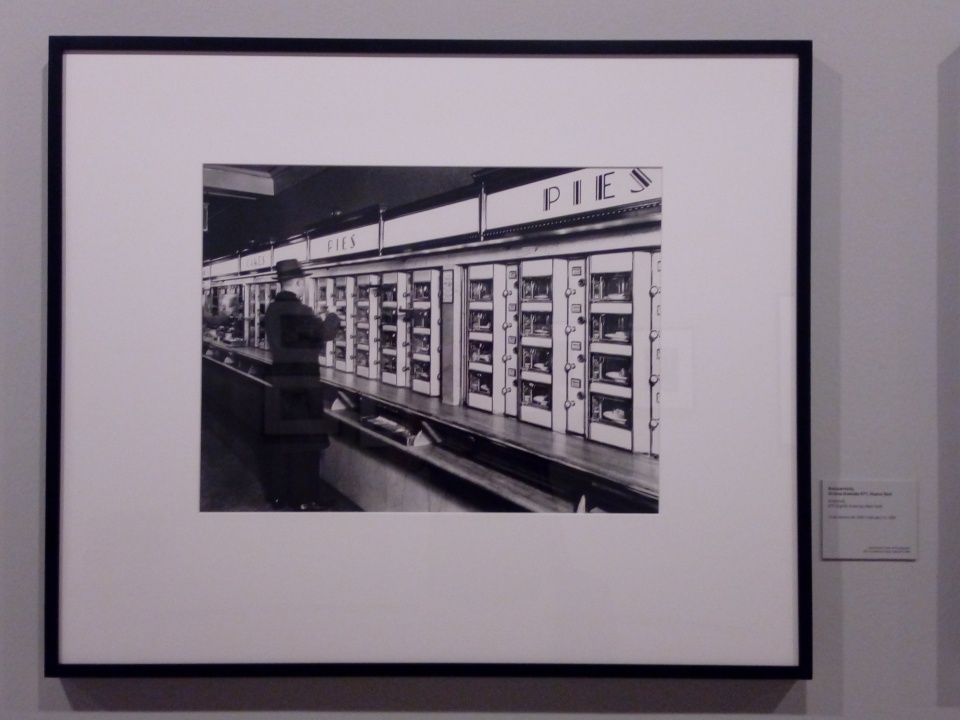
Fig. 10: Berenice Abbott, 1936. Automat, 977 8th Avenue, New York (Image from the exhibition)

Sources

Baldwin, G. (2013) Architecture in Photographs. Los Angeles: Getty Publications. ISBN 978-1-60606-152-7

de Diego, E. (2019) Berenice Abbott: In-Between Visualities. In: Davies, D. M. (ed.) Berenice Abbott – Portraits of Modernity. Madrid: Fundación MAPFRE. ISBN 978-84-9844-704-0

Golden, R. (Ed.) (2017) ANDY WARHOL Polaroids 1958-1987. Cologne: TASCHEN. ISBN 978-3-8365-6938-5

Haran, B. (2010) Homeless Houses: Classifying Walker Evans’s Photographs of Victorian Architecture. Oxford Art Journal, 33(2) June 2010, pp.189-210

PHotoESPAÑA 2019 (2019) Berenice Abbott – Portraits of Modernity. Available at http://www.phe.es/en/exhibition/berenice-abbott-portraits-modernity/ [Accessed 10 June 2019]

Smith, J. (2011) The Life and Death of Buildings: On Photography and Time. Princeton University Art Museum. Yale University Press. New Haven and London. ISBN 978-0-300-17435-9

31.03.19 > Annotation #1 On using buildings as art-motif to awaken social conscience to societal injustice

As a basis for deepening the contextualisation of my photographic practice and extending the theoretical underpinning of my body of photographic work I’ve written an annotated reference of one of my previous essays. My emerging work-in-progress and evolving final major project on spatial representation in the digital age stem from, and are informed by, this essay.

Sutherland, G. (2017) Can images of buildings as art-motif awaken social conscience as a counterpoint to societal judgment? Final Degree Essay Submission for Bachelor of Arts (Hons) in Photography, Interactive Design Institute – University of Hertfordshire, May 2017

Starting from historical enquiry into the role of architectural and urban photography in social reform and public conscience, the essay (in 6758 words) explores how social documentary, architectural and fine-art photography use buildings as art-motif to awaken social conscience to societal injustice.

The difference between the meaning of architecture and its cultural interpretation through the photographic medium is identified and the multiplicity of interpretation posited. An inherent societal pressure in architecture is examined, in particular through its propagation of cultural stereotypes and influence on collective memory.

The role of photography in social reform, questions on compassion fatigue and the resulting elevation of the genre to fine art photography in the 1930s are presented and mapped through to the end of the twentieth century at which time it is identified that the visual and photographic arts have ceased to consider art photography and documentary photography as having separate lines of development.

The path from Thomas Annan’s social reform photography, through Eugène Atget’s oeuvre, Walker Evans’ exhibition of Victorian houses, the Becher’s approach to evacuation of subjectivity, Thomas Struth’s objective depiction of cityscapes, through Marchand and Meffre’s depictions of ruin in the eraly 21st Century are explored through secondary sources, amongst which Arnold, Colomina, Haran, James, and Sliwinski.

The sources referenced place architecture and infrastructure within the context of theoretical and cultural considerations. Examples include the duality of messaging in Danny Lyon’s ’80 and 82 Beekman Street’ (Fig.1) and the mask of objectivity in the work of the Bechers (Fig.2).

Danny Lyon Beekman Street #2

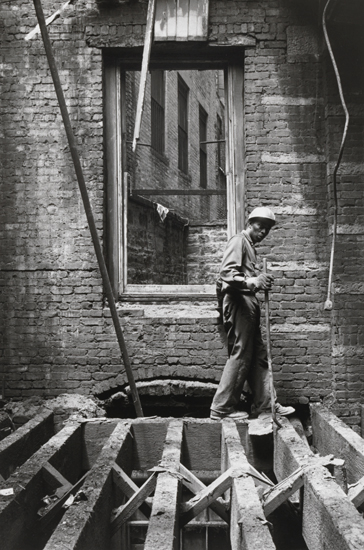
Fig. 1 Danny Lyon, 1967. Beekman Street subbasement. [1967 negative, 2007 Gelatin Silver Print]

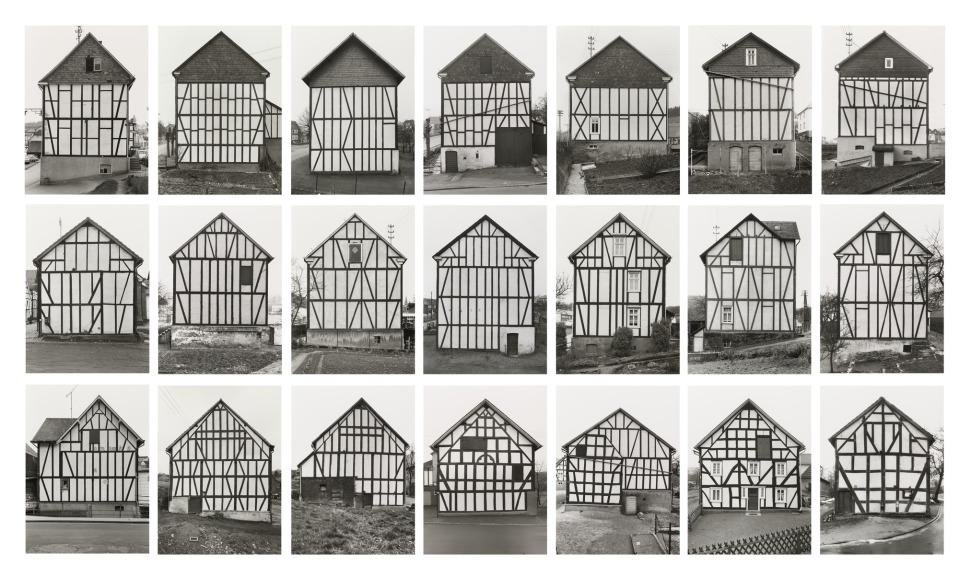
In the former, the image both awakens social conscience to cultural aspects regarding the loss of local neighbourhoods, but it can be argued that it also, ironically, stigmatizes the subjects, mainly labourers from the very neighbourhoods being demolished. The latter, as declared by the authors of the visual text, appear as images detached from any social or political message, until viewed through the lens of anthropomorphisation of their subject matter, in which case they reveal themselves as a statement of social egalitarianism within the depolitisisation of German society in the 1950s and 1960s.

Bernd & Hilla Becher Framework Houses

Fig. 4 Bernd and Hilla Becher, 1959 – 1973. Framework houses. [21 Gelatin Silver Prints. Each 16 1/4 x 12″ (41.2 x 30.5 cm)]

The essay incorporates Sliwinski’s considerations of tension between the capacity of photography to ‘numb’ the spectator into non-action or futility, and its ability to awaken social conscience by instilling a response. This is considered together with Colomina’s thesis on public space constituting a place solely to be photographed in, a space objectified for consumption as photographic image has become the means of experiencing and consuming architecture, together with the social judgment and societal conditioning that is carried within mass media.

The essay posits that, as perhaps for all photographs, but particularly in the case of images of buildings and societal infrastructure, their interpretation is found on a continuum between visual fact and metaphor.

It is this continuum of interpretation that allows images of buildings as art-motif to act at once to awaken social conscience on societal injustice, as much as to propagate it through reinforcement of message. This closing argument supports the case for a broader visual literacy.

[499 words]

25.02.19 > In a way that is eternal

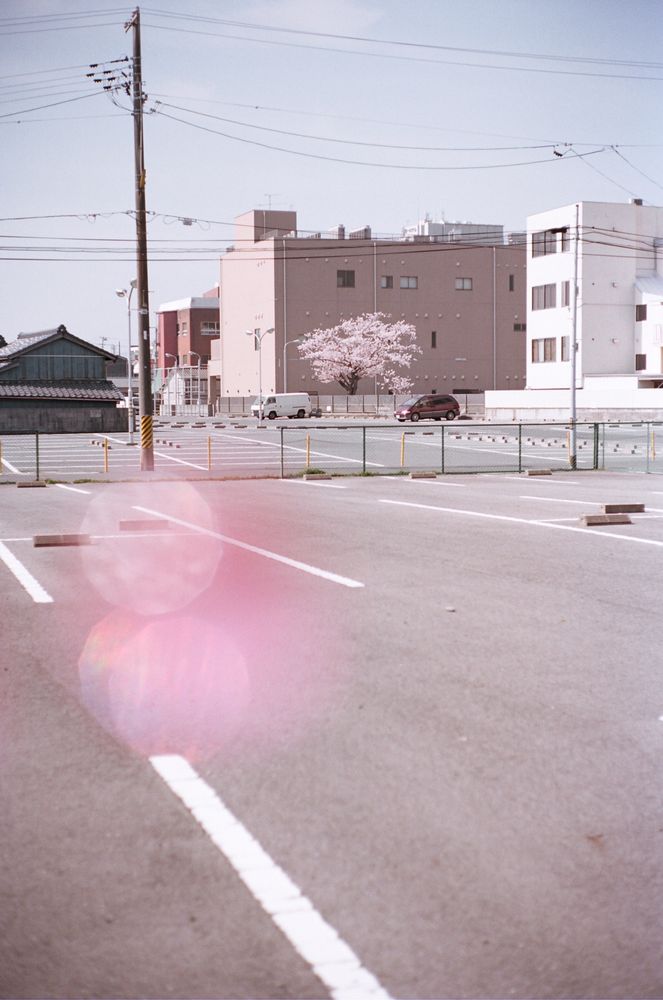
Cherry Blossom, its transient beauty embodied in the Japanese aesthetic, is correspondingly an important symbol in the country (The Art of Japan, 2017).

In the aftermath of the 2011 earthquake, tsunami, and resulting nuclear disaster in Fukushima, photographer Omori Katsumi travelled north from his residence in Urayasu towards the affected region. With his own residence in greater Tokyo not unaffected, although in the centre of the city the impact was felt to a much lesser extent, Omori felt driven – by a sense of compassion or complicity – to visit the disaster zone (The Japan Society, 2011; Fritsch 2018: 190). Along his route to Fukushima he documented the blossoming of the cherry trees.

Shibuya-ku, Tokyo, Katsumi Omori 1

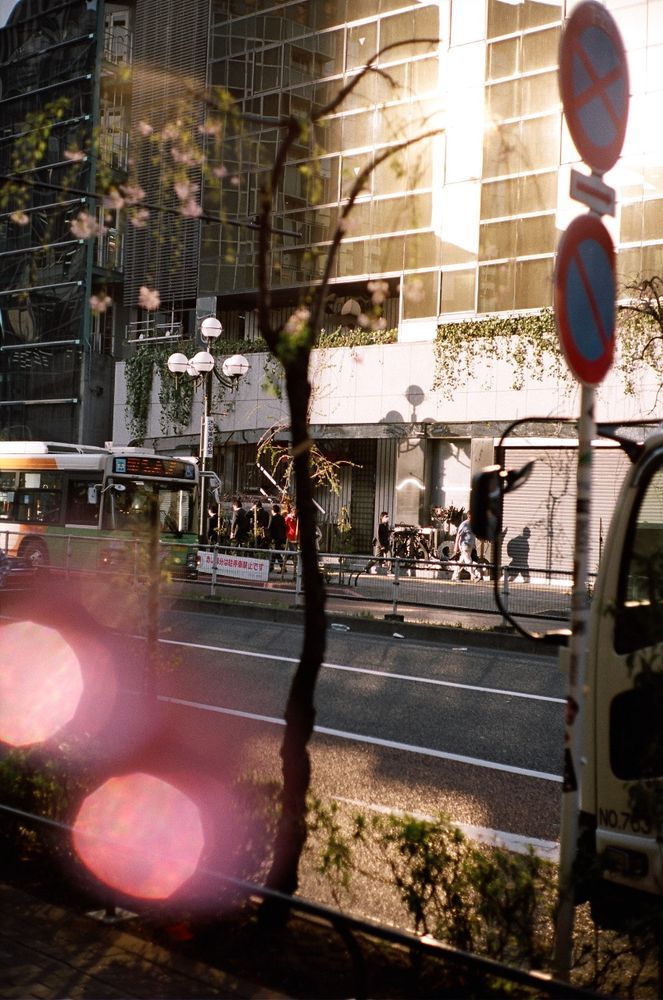
Fig. 1 Katsumi Omori, 2011, Shibuya-ku, Tokyo [59cm x 39.5cm Chromogenic Print]

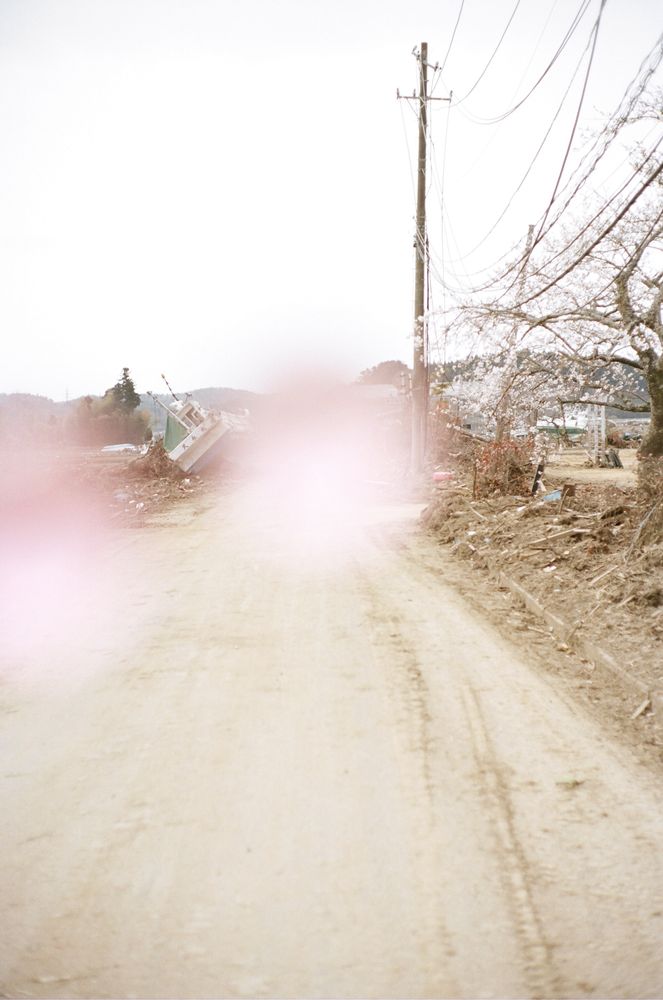
Indeed, although Omori’s home itself did not sustain much damage, the area where he lives is constructed on artificial land and some buildings were heavily impacted by the earthquake. As more information slowly became available, not even knowing exactly what he wanted to see, Omori states that he found himself wanting to go to Fukushima to witness the situation with his own eyes. Feeling that straight photography was not the way to approach this topic, he introduced a random, unrelated element (a translucent pink toy), emphasizing in this manner how we always look at things through something else, that is, through a position or a perspective (Fritsch: 189).

Omori’s documentary approach is as much frank and informal – and could be considered to emerge from new topographics – as it is subjective, opening a poetic dialogue that invites interpretation. That these images are in portrait format, in opposition to the convention for landscape photography, represents – according to Omori – ‘assertion’ in his documentary practice, with the inclusion of “some halation implying something people cannot actually see but probably exists: such as anxiety, possibly radiation or even wishes for the future” (The Japan Society, 2011).

In interviews on this series Omori regularly confirms his intention to photograph something that is invisible.

Iwak-shi, Fukushima, Katsumi OMORI 2

Fig. 2 Katsumi Omori, 2011, Iwaki-shi, Fukushima [59cm x 39.5cm Chromogenic Print]

“After the accident of the Fukushima nuclear plants we faced the difficulty to see, to see the world. You know, radioactivity, we couldn’t see that, so when I went to Fukushima I decided to put something, aahh [indicates ‘between the’ with gesticulation] camera and the real world” – Katsumi Omori (Opezzo 2014).

Within his photographic practice, the freezing of time is one particular element of the medium that interests Omori (Fritsch 2018: 189).

Reflecting this interest in time, and prior to the series Everything happens for the first time, Omori’s 2007 photobook Cherryblossoms had already emanated from his fascination with the symbolically fleeting nature of the blossom. Asking the viewer to consider memory in another way, for that photobook he adopted the use of tungsten film to render the blossom in a bluish tint (Shashasha 2019). However, in Everything happens for the first time, Omori proposes a new approach to the documentary of an unfolding nuclear disaster and its invisible threat.

To critically investigate the interlinked visible and invisible, the series denies transparency (What is the subject matter? What is the meaning?) through the images unconventional form and depictions of the banal quotidian in modern day Japan.

In his critical analysis, Taro Nettleton, assistant professor of art history at the Temple University Japan Campus, considers that “through their opacity Omori’s images disrupt the call to nationalism and endurance, which the Japanese government has made its official response to the disasters”. As such he places Omori’s series as an ethico-political study into societal perspectives and positioning in Japan, otherwise a study into the state projected framework of protection, control, care and normalcy within Japan’s governing system after the Fukushima disaster (Nettleton 2018: 22-23).

Minami Soma-shi, Fukushima, Katsumi Omori 3

Fig. 3 Katsumi Omori, 2011, Minami Soma-shi, Fukushima [59cm x 39.5cm Chromogenic Print]

Omori‘s work, coming from a photographer who is receptive to the invisible, could further be considered as being in resonance with the popular Japanese fascination with the ethereal. His project is marked by an ambivalence “that engages with the lack of transparency in TEPCO’s [Tokyo Electric Power Company], the state’s and the media’s treatment of the nuclear disaster” (idem).

By wearing this mask of opacity, Omori’s series directly challenges the opacity of the ruling hegemony, by reminding the viewer that when we look at the world we always look at it through multi-foiled filters. Those filters may be placed over our eyes by our own government.

Omori’s fascination with the freezing of the annual regenerative power of nature, which takes place on the human scale represented by the Cherry Blossoms in Everything happens for the first time, becomes overtly more intense through the tension arising from comparison with generational timescales of the half-life of radioactive material such as the isotopes of iodine-131, cesium-134 and cesium-137 released in the Fukushima disaster. This juxtaposition is strengthened by the aesthetic beauty of the soft-pink haletic effect created by an otherwise ‘innocent’ translucent toy. On a personal level for the photographer, the hazy images appear to resonate with Omori’s own memory of the first days following the disaster, where he recalls how his “neighbourhood was covered with dust, turning everything a hazy white” and how he could barely hang on to the sensation that his body belonged to him (Omori n.d.).

In Everything happens for the first time the end result is a poignant dialogue on mankind’s futile attempts to control, and exploit, the power of nature, an effort evident in the Japanese cultural psyche, in particular in the second half of the 20th century and the first decades of the 21st, combined with an ethico-political statement on the approach of the state at the time of the Fukushima disaster.

Sources

Fritsch, L. (2018) Ravens & Red Lipstick: Japanese Photography since 1945. London: Thames & Hudson. ISBN 978-0-500-29287-7

Nettleton, T. (2018) Photographing the Invisible: Katsumi Omori’s Everything happens for the first time, Afterimage, vol. 45, no. 4, pp. 22-25.

Omori, K. (n.d.) Everything Happens for the First Time (Subete wa hajimete okoru). [Online] Available at https://www.lensculture.com/articles/katsumi-omori-everything-happens-for-the-first-time [Accessed 26 November 2018]

Opezzo, I. (2014) Paris Photo Interviews for La Stampa. [Online] Available at http://ireneopezzo.com/paris-photo-interviews/ [Accessed 2 February 2019]

Shashasha (2019) Cherryblossoms. [Online] Available at https://www.shashasha.co/en/book/cherryblossoms [Accessed 4 February 2019]

The Japan Society (2011) Everything happens for the first time Katsumi Omori. [Online] Available at https://www.japansociety.org.uk/20062/everything-happens-for-the-first-time-katsumi-omori/ [Accessed 2 February 2019]

07.02.19 > I Am Here

In photographic intent I endeavor to reach an embodiment of otherness.

In purpose, I try – more often than not failing – to convey no message, only asking for consideration of different perspectives on the societal themes I explore. It starts with the viewer listening to the dialogue in the image, a simple invitation to join in. My images are boundaries between different points of view. They are visualizations that accommodate differing information spaces, each of these spaces a different existence. Visually I try to speak of ‘grace’, through a gaze of acceptance that strives to free itself from judgment, power and exploitation. But neither my thoughts nor my images are ever free of these burdens. The mask of acceptance that I wear creates an acknowledgment of difference. An apparent objectivity exists only in the presence of its companion subjectivity.

IMG_2698

Fig. 1 Gordon Sutherland, 2018, Untitled Work in Progress. [Unpublished Digital Infra-red Photograph IR 590]

There’s no hiding from the fact, my images are grounded in the Dusseldorf School of Bernd and Hilla Becher. In approach and construction they are documentary photographs, a form of preservation photography. Everything that can be seen was there, even if my interpretation of ‘the instant’ is in itself a question: how long is an instant?

In the above image of More London (Foster & Partners) – from an unpublished mini series realized over one morning in summer 2018 – my intent was to visualise the dialogue between nature and the built environment in the context of global capitalism (Fig.1). The subject matter, perspective and compositional elements of the image release it from the power struggle between nature and capitalist development, although the overall series has a more dystopian, linear narrative on exploitation of resources in a non-circular economy. This image emerges, naturally, at the mid-point of the narrative.

I work at the crossover between architectural photography, social documentary and fine-art photography exploring buildings and infrastructure as an art-motif for awakening social conscience. My approach is influenced by many photographers, however the two most influential are James Welling, in particular his use of colour theory in the series Glass House, and Hélène Binet, from her embodiment of religious – arguably masonic – and cosmic motifs and references in her photographic oeuvre. The resonance of these works on my personal, indoctrinated world views emerges throughout my photographic practice, much of which is highly autobiographical.

IMG_2503-9

Fig. 2 Gordon Sutherland, 2018, Untitled Work in Progress, 2018 [Unpublished Digital Infra-red Photograph IR 590]

In an unpublished mini series of images taken over one afternoon in the National Theatre, London, my intent was to ask the viewer to question the intent of the – in this case brutalist – architecture. By considering the interplay between the weight of the construction material and the diffusion of light into ‘spaces’ encumbered by inertia I ultimately explore greater themes: how theatrical work can pose questions around prevailing cultural norms. In this image at the entrance to the theatre, ‘lightness’ and ‘heaviness’ are given equal space within the image, the concrete pillar almost floating between the two (Fig.2). For the viewer who is interested, both in the architecture itself and in its photographic representation, there emerges an intentional dialogue on the role of theatre in balancing the forces at play within a cultural hegemony. The series is conceived as a linear narrative, in the tradition of architectural photography traceable from the current day to Frederick H. Evans body of work in the late 19th Century.

Midday Hand Blended-7

Fig. 3 Gordon Sutherland, 2018, Agora Simone Veil & the Willy Brandt Building, European Parliament Complex, Brussels. [Unpublished Digital Blended Spectra Photograph]

In the unpublished series this time I’m voting I carried out a photographic enquiry of the interplay between architecture, surveillance and technology in the public space of the European Parliament Complex in Brussels, Belgium. The series informs my final major project with working title ‘The Digital Divide’ which interrogates the human condition in face of the information age, in particular the concept of digital existence within smart cities. The image of the central square of the European Parliament Complex in Brussels (Fig.3) explores the power play between institutions, media, surveillance and the individual. The objective stance belies the photographic intent of the image which depicts the possibility of a dystopian future in which people constitute controlled and surveyed media in the public space. As such the image veers towards monologue than dialogue and, as the rest of the series, is a departure from my normal photographic practice.

IRR-2017-032-8492 Braigh Craobhach

Fig. 4 Gordon Sutherland, 2017, Braigh Craobhach [75 x 50 cm (30 x 20 in.) fine-art giclée inkjet pigment print] (Private Collection, Athens)

From the series Another Path (Sutherland 2017) the image Braigh Craobhach (Fig.4) is distinctly representative of my photographic intent. Using acrylic filters and photographic gels in the naturally occurring colours of the Inner Hebrides in Scotland, combined with long exposure photography, I aimed to deconstruct the processes of encroachment in the villages of the Highland clearances. The series has a linear narrative which develops according to the extent of the encroachment.

GS07 IRR-2018-009-1080 Knightswood Flats

Fig. 5 Gordon Sutherland, 2018, Knightswood Flats, Glasgow [60 x 90 cm (23.6 x 35.4 in.) fine-art giclée inkjet pigment print] (Private Collection, Brussels)

From the series Looking for Daylight (Sutherland 2018) the image Knightswood Flats, Glasgow (Fig.5), is typical of my photographic intent as an invitation to dialogue. In this case a discussion into the relationship between people, the built environment, modern day infrastructure, and the natural environment. The objective stance in the image belies the message given by the compositional elements and their relative placing within the image. The series Looking for Daylight can be read either as a linear narrative depicting the history of architecture in Glasgow, or seen in their post modern non-linear narrative they constitute photographic plates to illustrate the science fiction novel Lanark: A Life in Four Books by Alasdair Gray, and the two cities of Glasgow and Unthank in which it is set.

The photographic journey to here has been a development of self-expression coupled with a conviction for dialogue and acceptance without judgment. My most recent project, this time I’m voting, constituted a visible departure from that intent, with less subtle messaging. At any rate, the cultural and personal context cannot be entirely separated unless the photographer is a machine – and even that is open to debate. The image, or the photographer, remains a burden. The one does not escape the other.

The exploration of my visual voice continues through extension of Guattarian philosophy at today’s confluence of the environmental crisis and the information age. By exploring critical contextual theory and contemporary visual culture I am preparing for the next stage in informing my degree major project through exploration of surveillance and data flows in digitally connected cultures.

This exploration emerges ahead of a photography project this coming summer in Tokyo as part of the Surfaces and Strategies module.

For this reason my starting point for exploration of context and visual culture is art and religion in Japan, building on the perspectives and photographic practice already explored from my very own, personal western perspective.

Sources:

Sutherland, G. (2017) Another Path. [Online] Available at http://www.irrationalangle.com/another-path/ [Accessed 7 February 2019]

Sutherland, G. (2018) Looking for Daylight. [Online] Available at http://www.irrationalangle.com/looking-for-daylight/ [Accessed 7 February 2019]